
 EN

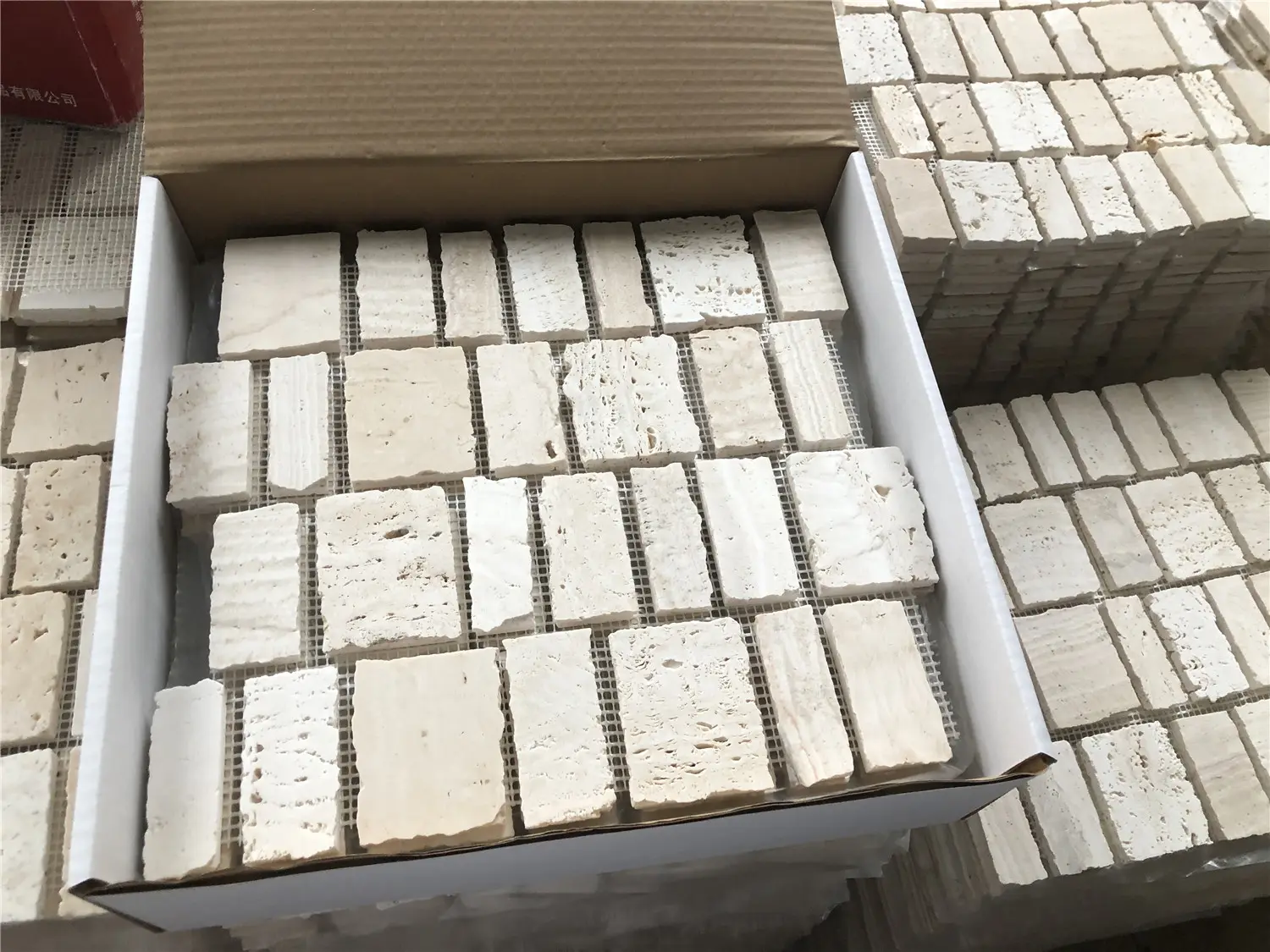
Small-format stone mosaic tiles turn plain surfaces into focal points, yet the value reaches past decoration. In luxury projects, specifiers reach for them where large slabs fail: tight curves, wet floors, and detailed insets. The appeal is scale and control — many small pieces form patterns a single slab cannot, while staying manageable on difficult substrates. Their small units flex around radii that would crack a rigid panel, which is why designers return to them for pools, spas, and feature walls.
Where mosaic earns its place
Bathroom feature walls and wet-room showers
In a bathroom, stone mosaic tiles wrap a feature wall or a wet-room shower without fighting the plumbing or the slope. Small units follow the fall of a shower floor and the returns of a niche, so the surface stays continuous instead of breaking at every corner. Honed limestone or travertine reads warm under soft light, and the joints add grip where bare feet meet water. A contrasting border frames the wall, turning a functional shower into a quiet luxury moment, while limiting the size of any single failed piece.
Pool deck, waterline and spa surrounds
Pool decks expose stone to constant saturation, chlorine, and bare feet. Stone mosaic tiles suit this context because the many joints share movement and the small pieces resist the cracking larger pavers show at freeze-thaw edges. At the waterline, a band of mosaic hides the tidemark that plain tile reveals and disguises mineral staining between cleanings. Spa surrounds gain the same logic: curved copings follow the basin radius and the textured surface stays composed under spray. A coastal resort chose this route after its slab coping fractured on the curves.
Hotel lobby medallions and floor insets
Lobbies use mosaic as a signature. Stone mosaic tiles set a central medallion in the entrance floor to signal craft before a guest reaches the desk, and radial patterns read clearly from a distance. Because the pieces are tiny, a medallion carries fine detail — a monogram, a compass rose, a border matching the reception front. Installers build the motif on one mesh sheet so the whole design drops in as a single unit, avoiding the misalignment that hand-laying loose tesserae would cause. The result holds under rolling luggage when the stone grade suits traffic.
Backsplash and spa-grade details
Kitchen backsplash installation logic
A kitchen backsplash is mosaic's familiar home, and the logic is practical. Mesh-mounted sheets cover an uneven plaster wall in one pass behind the range and sink, where splashes land and the surface must wipe down fast. The many grout lines read as texture rather than grime. Natural stone behind a cooktop should be sealed against oil, but the small format means any future chip is a single tessera, not a cracked slab. Specifiers pick honed marble or quartzite here for a calm, tactile backdrop.
Spa-style powder rooms and steam areas
Spa-grade bathrooms extend the wet-area logic into smaller rooms. Mosaic makes a powder room feature wall feel considered rather than merely tiled, and steam rooms need surfaces that tolerate heat and condensation without lifting. Short joint lines let vapor escape and the substrate breathe, reducing the debonding risk that long slab seams show. Soft grey limestone or onyx-look pieces create the dim, layered calm a spa promises, while staying easy to keep sanitary through daily cleaning.
Why mesh-mounted formats suit wet and curved areas
The installation logic behind mesh mounting
Mesh mounting is why small format works at scale. Stone mosaic tiles arrive on a fabric or paper backing that carries dozens of tesserae, so an installer sets a whole pattern in one trowel pass instead of placing hundreds of loose pieces. The backing holds joint width constant, keeping the grout line even and the slip profile predictable. On a curved pool coping or domed spa ceiling, the sheet flexes to a radius a rigid tile cannot follow. Back-buttering with polymer-modified adhesive locks the sheet down, so movement spreads across many joints. For the coastal resort, this meant coping that followed the basin curve without a single fracture and deck joints that kept confident footing.
Slip resistance and water management
Wet zones live or die by slip performance, measured under ANSI A326.3 as DCOF. Stone mosaic tiles in a honed, textured finish earn a higher dynamic coefficient than polished stone, and the grout lines add micro-grip underfoot. Water management matters as much: a proper slope and a waterproof membrane behind the mesh keep the substrate dry, while ASTM C97 absorption limits decide which natural stone survives pool chemistry. Freeze-thaw edges need stone rated under ASTM C666 so the waterline band does not spall after winter.
Design logic — pattern, scale and stone
Reading pattern, scale and selecting natural stone
Pattern and scale decide whether mosaic feels luxury or busy. Stone mosaic tiles in a large room carry a bold medallion or a wide waterline band; a small powder room suits a quiet field with one accent row. Lay sheets in sequence so a stone's veining repeats and the wall reads as one material rather than scattered chips. Marble and onyx give depth, quartzite brings hardness, limestone offers a soft matte calm. Keep grout close to the stone so joints disappear, or contrast it for a graphic look, then seal and maintain on a schedule.
Stone mosaic tiles earn their place across bathrooms, pools, lobbies, kitchens, and spas because small format and mesh mounting solve problems slabs cannot. They follow curves, share movement across many joints, and stay safe underfoot where water rules. The resort that switched from slab coping to mesh-mounted mosaic gained a waterline that hides staining and a deck that no longer cracks on the radius. With the right stone, finish, and grout, mosaic delivers pattern, scale, and lasting performance in a luxury project's wettest corners.
Frequently Asked Questions
Question
Where does mosaic outperform large slabs?
Answer: Mosaic outperforms slabs on curves, wet floors, and detailed insets. Small tesserae follow a pool coping radius or a shower slope that a rigid panel would crack across, and the many joints share movement so individual pieces seldom fail. Mesh mounting sets the whole pattern in one pass, keeping joint width even. Designers choose it for bathrooms, spas, waterlines, and lobby medallions where precision and grip matter more than slab scale.
Question
Why does mesh mounting suit wet and curved areas?
Answer: Mesh backing holds dozens of tesserae in fixed alignment, so an installer sets a full pattern with one trowel pass and the joint width stays constant. On a curved spa ceiling or pool coping the sheet flexes to the radius a rigid tile cannot follow. Back-buttering with polymer-modified adhesive spreads movement across many joints, reducing cracks. The backing also keeps grout lines even, which keeps the slip profile predictable under bare, wet feet.
Question
How should slip resistance be specified for a pool deck?
Answer: Specify a honed or textured finish and confirm the dynamic coefficient of friction under ANSI A326.3, which rates wet slip performance. Grout lines add micro-grip, but the stone itself must meet the project's DCOF target. Choose a natural stone with low enough absorption per ASTM C97 to resist pool chemistry, and for freeze-thaw edges verify rating under ASTM C666. Proper slope and a waterproof membrane behind the mesh keep the substrate dry and safe.
Question
Which natural stone fits a spa backsplash?
Answer: Honed marble and quartzite suit spa backsplashes for their calm tone and hardness, while limestone gives a soft matte feel. Onyx-look pieces add depth under dim light. Pick a stone with low absorption and seal it against oil and steam so the grout stays clean. The small format means a future chip is one tessera, not a cracked slab, and mesh mounting keeps the pattern aligned across an uneven plaster wall.
Question
Can stone mosaic tiles be used on a curved pool waterline?
Answer: Small tesserae and flexible mesh backing bend to the pool's radius without cracking, so the band follows a curved waterline cleanly. The many joints absorb movement from ground shift and temperature change, and a honed finish keeps the surface safe underfoot. Set on a waterproof membrane with polymer adhesive, the band hides the tidemark plain tile reveals and resists staining from constant saturation.