
 EN
EN

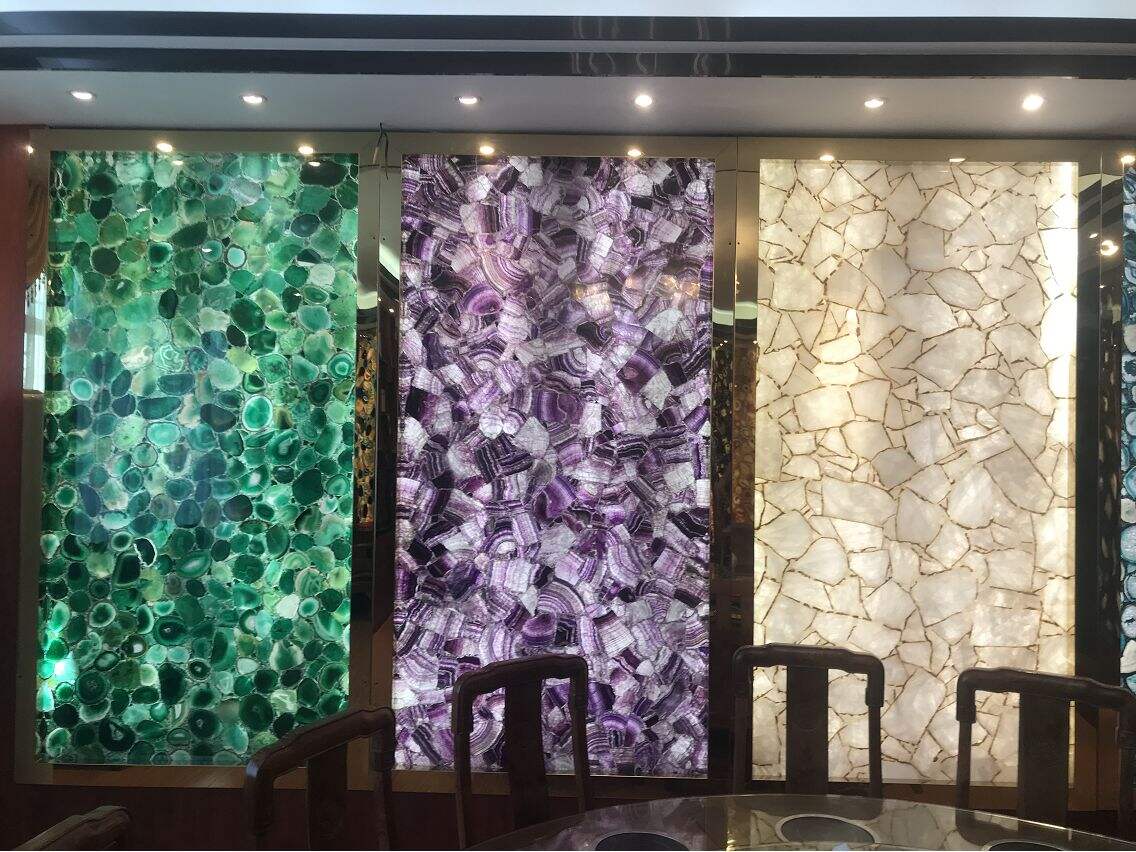
Aesthetic Uniqueness of Blue Agate Countertops
Translucency, mineral veining, and chromatic depth: What defines blue agate countertops visually
What sets blue agate countertops apart is how they let light pass right through them. The material allows illumination to travel about 15 millimeters deep, creating these amazing glowing effects when used with built-in LED strips. These stones were created over thousands of years as layers of silica settled in patterns nobody else could ever duplicate. Every single slab comes with its own unique mineral streaks, kind of like brushstrokes of different blues ranging from sky blue at sunrise to deep ocean hues just before night falls. Regular granite and marble don't do this because they block light completely. But blue agate actually plays with the light, scattering it around inside the stone which gives off that special glow that manufactured materials simply cannot match. That's why so many designers love using these countertops on those big central island units in kitchens or making them the star attraction in bathroom vanities where people want something truly special.
How blue agate countertops compare aesthetically to Calacatta marble, Nero Marquina, and Bardiglio
Blue agate brings something completely different to the table when compared with those fancy Italian marbles. Sure, Calacatta has that classic look with its golden veins against white background, but it just doesn't have the same depth or color variety. Nero Marquina makes quite a statement with its stark contrasts, though its simple black and white scheme can't match what blue agate does so well - creating that feeling of being underwater. Bardiglio's gray tones are nice and understated, but they miss out on the real punch of color and that special glow that comes from actual gemstone material. What makes blue agate stand apart is how those bands form naturally through layers of silica over time, which gives them a much smoother, flowing appearance compared to the sharp lines we see in most marbles. Interior designers who want something truly unique often find themselves drawn back to blue agate again and again because of the way it catches and plays with light, making it an amazing focal point in any space.
Performance & Practicality: Durability, Porosity, and Maintenance of Blue Agate Countertops
Hardness, Scratch Resistance, and Thermal Stability vs. Granite, Quartz, and Marble
Blue agate falls somewhere around 6.5 to 7 on the Mohs scale, which puts it right up there with granite and quartz in terms of hardness. Marble, by comparison, scores much lower at 3 to 5, so blue agate stands up pretty well against those everyday kitchen scratches from knives and pots. That said, because of how its crystals are arranged, blue agate tends to be more fragile than granite. Fabricators need to handle it with extra care when cutting and installing countertops. When it comes to heat resistance, blue agate handles moderate temperatures better than marble does, but still can't match granite's ability to absorb and retain heat. Unlike quartz, blue agate won't change color after short exposure to heat, but don't skip using trivets for hot pans anyway. Thermal shock remains a concern. Overall, blue agate offers a middle ground between the delicate nature of marble and the tough durability of granite. It needs some attention in daily use, but still maintains that beautiful appearance most people want in their kitchens.
Sealing Needs and Stain Susceptibility Compared to Sodalite and Azul Bahia Countertops
Blue agate has just enough pores in its structure that it needs sealing once a year. Quartz doesn't need this treatment at all since it's not porous, while marble demands much more frequent attention because of its high porosity. When spills happen on blue agate surfaces, they should be cleaned right away. The stone resists stains better than marble does and holds up pretty well against sodalite too, which shares similar chemical makeup. Azul Bahia granite works differently though. Being denser material, most people find they only need to seal it about twice or three times over several years. For everyday cleaning tasks, stick with pH neutral products rather than anything acidic like vinegar or those citrus based cleaners. Acidic substances can dull the surface shine and actually eat away at those pretty band patterns we love so much. With proper care routine, these stones maintain their attractive appearance for years without becoming a major chore.
Design Integration and Spatial Impact of Blue Agate Countertops
Luxury kitchen islands and bathroom vanities: Material pairings and lighting considerations for blue agate countertops
Blue agate can turn ordinary countertops into glowing focal points, particularly on kitchen islands and bathroom vanities when used right. The best looks come from combining these translucent stones with warm walnut cabinets or dark metal details that balance out their bright colors. Some designers love putting them next to textured marble walls and brass hardware too, creating depth and interest without being too matchy-matchy. And don't forget about lighting - proper illumination makes all the difference in showcasing those beautiful blues and greens inside the stone.
- Integrated LED backlighting reveals subsurface mineral architecture and intensifies chromatic depth
- Directional spotlights, angled at 30°–45°, accentuate subtle tonal shifts across veining
- Perimeter ambient lighting casts soft halos around waterfall edges, enhancing dimensionality
Neutral quartzite flooring provides visual calm without competing, while satin-finished metals reflect light through rather than off the stone—amplifying its inner radiance. Positioning near north- or east-facing windows maximizes natural color transitions throughout the day. These intentional strategies elevate blue agate beyond material choice to curated spatial experience.
Rarity, Sourcing, and Value Positioning of Blue Agate Countertops
What makes blue agate so special? Well, it all comes down to how rare it actually is. This stone only forms when nature gets really specific about things. We're talking about those volcanic areas where hot water mixes with silica rich fluids. These create those beautiful colored bands we see, but honestly, most agate doesn't turn out blue at all. Less than 3% of all agate deposits around the world end up with that deep blue translucency people love. And even when they do find good material, getting slabs thick enough for countertops (at least 1.5 cm) without any cracks or weaknesses? That happens maybe 15 times out of 100 according to what geologists have been tracking. Most other stones like quartz or granite come from big industrial operations, but blue agate is different. It mostly comes from small scale mining operations in Brazil and Uruguay where workers carefully extract each piece by hand to keep those amazing banding patterns intact. No wonder prices are so steep then. Blue agate usually costs between 5 to 8 times what premium marble does. For designers looking to make a statement, this stuff isn't just expensive because it looks good. It's valuable because there simply isn't much of it available, and collectors know exactly where it comes from and what makes each slab unique.
Frequently Asked Questions (FAQ)
Why are blue agate countertops so expensive?
Blue agate countertops are expensive due to their rarity and the complexity involved in sourcing and crafting them. Less than 3% of agate deposits yield the sought-after blue variation, and their production often involves small scale operations with careful extraction to preserve their unique banding patterns.
How should I maintain my blue agate countertops?
Maintaining blue agate countertops involves annual sealing to protect against stains and cleaning spills immediately to prevent damage. It is recommended to use pH neutral cleaning products and avoid acidic cleaners that can dull the stone's shine.
Can blue agate countertops withstand high temperatures?
Blue agate handles moderate temperatures better than marble but doesn't match granite’s heat resistance. Avoid placing hot pans directly on the surface by using trivets to prevent potential thermal shock.
Table of Contents
- Aesthetic Uniqueness of Blue Agate Countertops
- Performance & Practicality: Durability, Porosity, and Maintenance of Blue Agate Countertops
- Design Integration and Spatial Impact of Blue Agate Countertops
- Rarity, Sourcing, and Value Positioning of Blue Agate Countertops
- Frequently Asked Questions (FAQ)