
 EN
EN

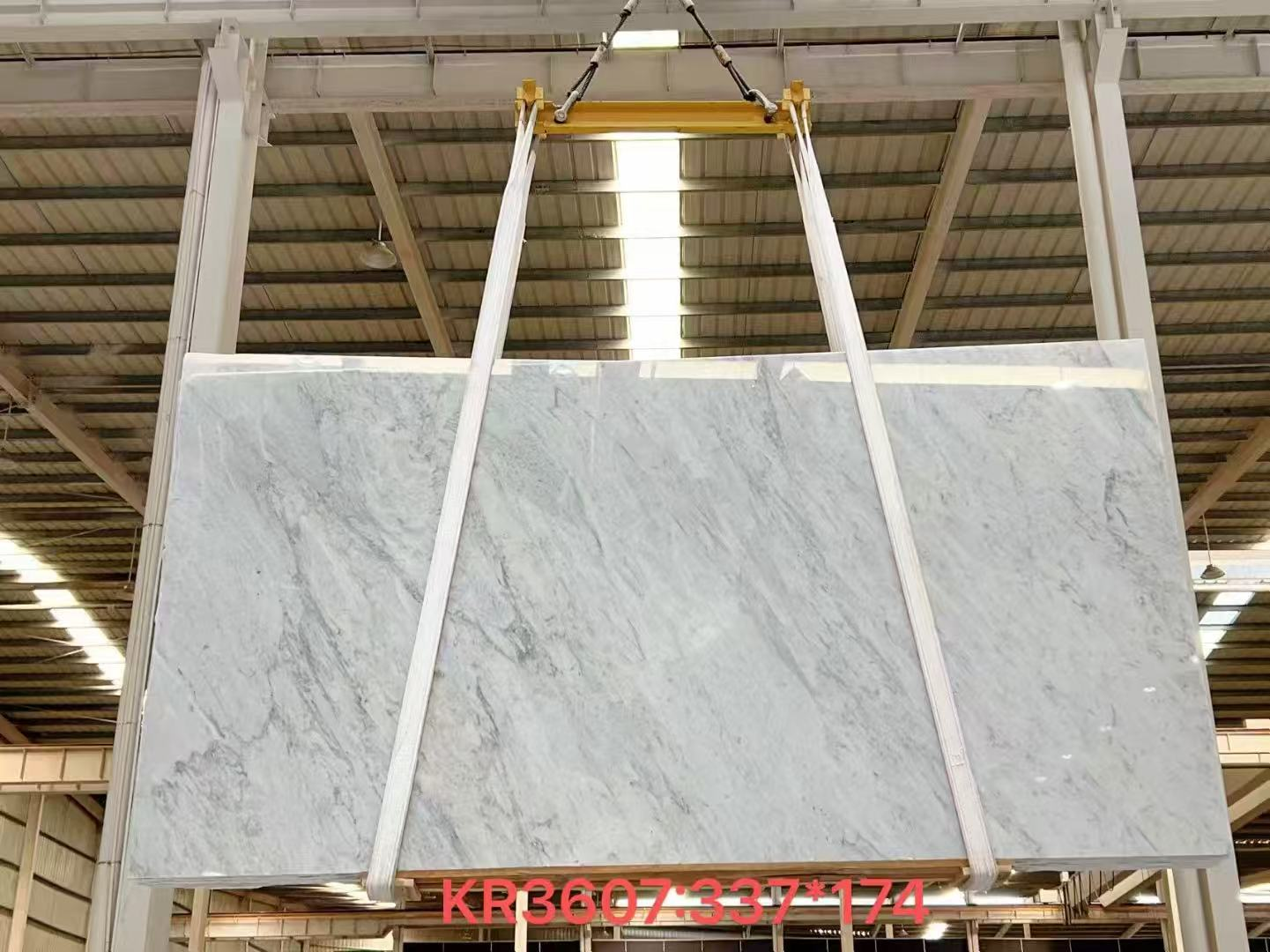
Geological Origin and Distinctive Veining
Carrara white slab is a natural metamorphic stone quarried from the Apuan Alps in Tuscany, Italy, a region with over 2,000 years of marble extraction heritage. Known as bianco Carrara, it supplied the Pantheon in Rome and Michelangelo's sculptures. Its cool white to blue-gray base features soft, feathery gray veining formed by mineral impurities during metamorphism. Each slab's pattern is entirely unique, ranging from delicate linear streaks to bold, flowing veins, ensuring no two installations are identical. The stone's fine grain and luminous surface deliver understated elegance, while its relatively low porosity and moderate acid resistance support practical performance. Architects and designers value Carrara for its rare ability to harmonize classical gravitas with contemporary minimalism, making it a timeless choice for high-end commercial interiors.
Natural vs. Engineered Carrara White Slab Options
Natural Carrara white marble remains the benchmark for authenticity, depth, and historical resonance. Engineered alternatives, including quartz and sintered stone, replicate its signature gray-on-white aesthetic but offer uniform patterning, non-porosity, and superior resistance to staining and etching. Unlike natural marble, engineered slabs require no sealing and minimal maintenance. Yet they lack the organic variation, tactile warmth, and cultural weight of genuine Carrara. Specifiers must balance these trade-offs: natural stone excels in low-impact, high-aesthetic zones such as reception walls or vanity tops, while engineered options better suit high-traffic, high-moisture areas like food-service counters or clinical surfaces where durability and hygiene are paramount.
Countertops and Kitchen Islands
Carrara white slab transforms kitchen islands into luminous focal points. Designers favor large-format slabs to achieve seamless, uninterrupted surfaces, enhancing spatial flow and visual continuity. Its subtle gray veining adds quiet character without competing with surrounding materials. Polished finishes maximize light reflection and sophistication, while honed surfaces provide a softer, matte tactility ideal for modern hospitality kitchens. Because marble is porous, application of a high-quality penetrating sealer during fabrication is essential to resist etching from acidic spills like citrus or vinegar. With consistent pH-neutral cleaning and annual resealing, Carrara countertops retain their refined appearance for decades.
Bathroom Vanities and Shower Walls
In bathrooms, Carrara white slab delivers spa-like serenity. Large-format panels minimize grout lines, reinforcing a clean, expansive aesthetic even in compact spaces. Honed finishes are especially effective here: they offer gentle slip resistance and diffuse light more evenly than polished surfaces, enhancing perceived volume and calm. Prior to installation, a professional-grade penetrating sealer must be applied to protect against moisture absorption and staining from soaps, shampoos, and hard water deposits. Daily care with pH-neutral cleaners preserves surface integrity, avoiding the dulling or etching that acidic or abrasive products cause.
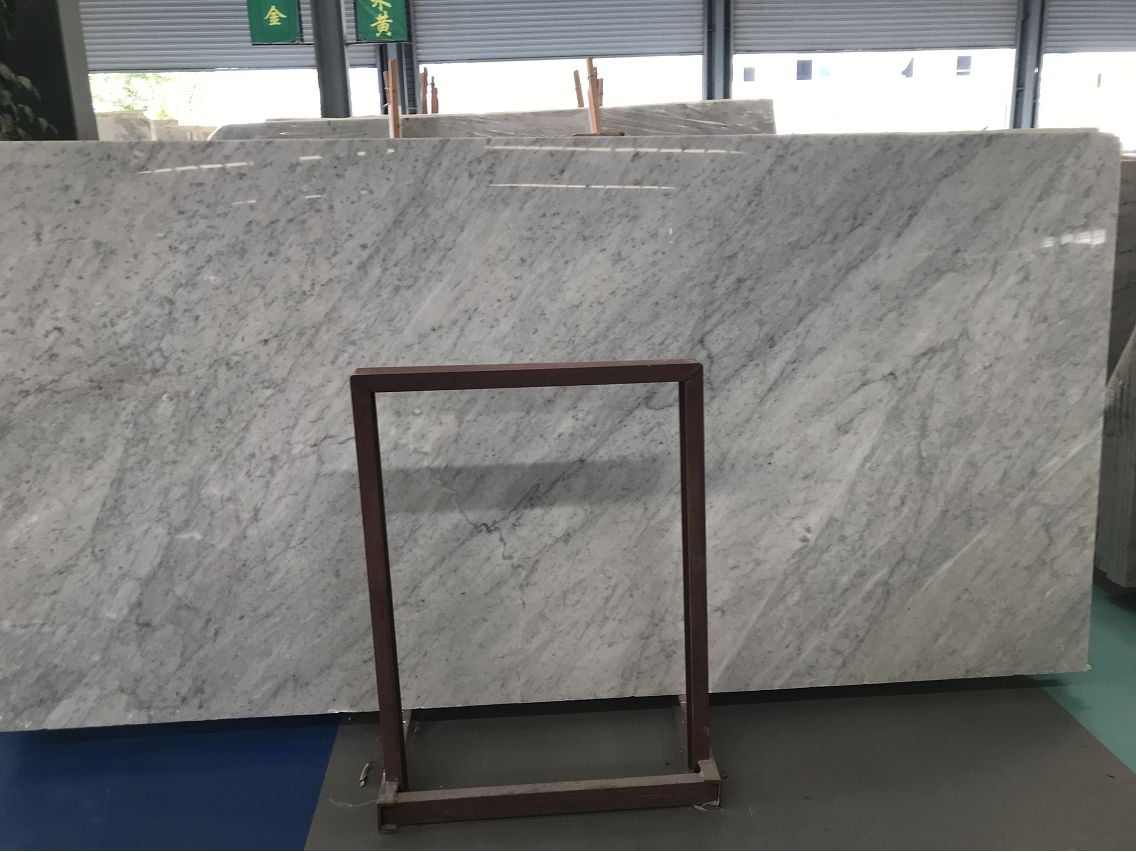
Architectural Cladding and Feature Walls
Carrara white slab elevates architectural cladding and feature walls in lobbies, retail entrances, and luxury hospitality settings. Book-matched panels create dramatic, symmetrical veining, turning vertical surfaces into immersive design statements. Its high light reflectance amplifies both natural daylight and artificial lighting, contributing to energy-efficient interior environments. When properly sealed and maintained, Carrara withstands heavy foot traffic on vertical applications far better than horizontal ones. The growing preference for large-format slabs reflects architects' emphasis on seamless, monolithic luxury, an aesthetic increasingly central to premium commercial identity.
Porosity, Stain Resistance, and Sealing Best Practices
Carrara white slab is a calcium carbonate–based metamorphic rock, inherently porous and vulnerable to staining from coffee, wine, and acidic cleaners. A high-quality penetrating sealer, as recommended by the Natural Stone Institute, is the cornerstone of protection. It bonds below the surface to repel oil- and water-based contaminants without altering appearance or breathability. Best practice calls for professional sealing during fabrication, followed by reapplication every 6 to 12 months depending on usage intensity and finish type. Daily maintenance requires only a soft microfiber cloth and pH-neutral cleaner; abrasive or acidic agents will etch polished surfaces, requiring professional repolishing to restore.
Durability Under High-Traffic and Humid Conditions
With a Mohs hardness of 3 to 4, Carrara is softer than granite and susceptible to scratching from grit, sand, or uncontrolled foot traffic. It performs best in controlled, vertical, or low-impact applications, such as feature walls, reception desks, or bathroom vanities, where abrasion risk is minimized. In humid zones like shower enclosures or spa areas, a honed finish is strongly advised: it improves slip resistance and visually conceals minor etching from hard water exposure. Long-term durability depends less on inherent hardness and more on rigorous sealing discipline, because moisture ingress, particularly in freeze-thaw cycles or repeatedly saturated conditions, can trigger internal spalling. Proper specification and stewardship, not just material selection, determine real-world longevity.
Sourcing and Specifying Authentic Carrara White Slab
Authentic Carrara white slab must be traceable to the Apuan Alps quarries in Tuscany. Reputable suppliers provide quarry certificates, batch numbers, and full import documentation to distinguish genuine Italian marble from Turkish, Chinese, or resin-filled imitations. During inspection, examine the slab back: natural crystalline structure confirms solid stone, while a uniform gray resin backing signals a composite. Request full disclosure of any post-quarry resin treatment, as it alters porosity and affects long-term sealing behavior. Compare multiple slabs side by side: natural variation in veining density and tone is a hallmark of authenticity, while unnervingly uniform patterns suggest digital printing or engineered replication. Grading typically reflects whiteness level and veining clarity, with higher grades commanding premium pricing. Direct sourcing from Italian quarries reduces substitution risk and supports supply chain transparency. By pairing documentation review with hands-on slab evaluation, architects and designers ensure specifications align with both aesthetic intent and technical performance requirements.
Frequently Asked Questions
What makes Carrara white slab unique? The uniqueness of Carrara white slab lies in its cool white to blue-gray base with soft, feathery gray veining formed naturally during metamorphism. Every slab has a one-of-a-kind pattern, contributing to its distinct elegance and rarity.
How does natural Carrara white marble compare to engineered slabs? Natural marble provides authentic depth, tactile warmth, and historical resonance, while engineered slabs offer uniform aesthetics, non-porosity, and durability without needing sealing. The choice depends on application requirements and design preferences.
What are the key applications of Carrara white slabs? Carrara white slabs are ideal for countertops, kitchen islands, bathroom vanities, shower walls, architectural cladding, and feature walls in luxury commercial spaces.
How should I maintain Carrara white slabs? Maintaining Carrara requires regular sealing every 6 to 12 months and daily cleaning with a soft microfiber cloth and pH-neutral cleaner. Avoid abrasive or acidic agents to preserve the quality of the slab.
Where can I source authentic Carrara white slabs? Authentic Carrara slabs are traceable to the Apuan Alps in Tuscany. Reputable suppliers provide quarry certificates, batch numbers, and full import documentation to ensure genuine Italian marble.