
 EN
EN

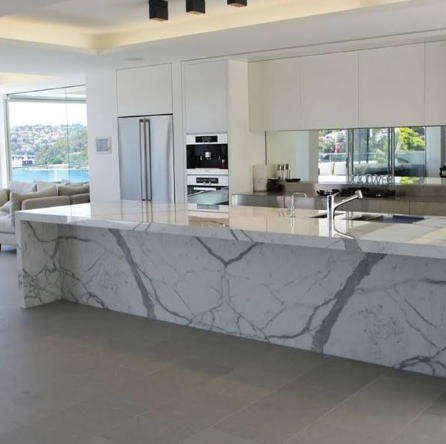
Why Marble Kitchen Countertops Require Specialized Sealing
The Science of Marble Porosity and Vulnerability to Etching and Staining
Kitchen countertops made from marble have tiny pores that soak up liquids really fast. A glass of red wine left on the counter might seep into those pores in just about half a minute. Why does this happen? Well, marble is basically made of calcium carbonate, and it ranks around 3 to 4 on the Mohs hardness scale, which means it's not very hard at all. Acidic stuff like lemon juice or vinegar doesn't sit well on marble surfaces either. These acids start reacting with the calcium carbonate, creating what's called etching. This isn't just a scratch on top, it actually changes how the stone looks at a molecular level, so regular cleaning won't fix it. Professional refinishing becomes necessary. Studies indicate that unsealed marble takes in stains about fifteen times quicker than granite does. Coffee spills and cooking oil tend to leave the worst marks behind. Marble has these two big problems together rapid liquid absorption and sensitivity to acids which is why special sealing treatments are needed to protect against its naturally reactive properties.
Why Sealers Don’t Prevent Etching—And What They Actually Protect Against
Penetrating sealers do stop most oil and water stains pretty well, though they won't stop etching at all. Etching happens when acids react with calcium carbonate on the surface, so it forms right on top of whatever sealer was applied underneath. Sealers mainly work by filling pores and making them water resistant, cutting down water stain risks around 90% according to some lab tests. They also help block things like wine, juice, and food coloring from getting absorbed into surfaces. What sealers don't protect against is acid damage. This makes all the difference actually. A lot of homeowners think sealing equals complete protection against chemicals, but then they find out the hard way that quick action matters a lot when dealing with acidic spills. Just wiping those away fast still remains absolutely necessary despite having sealed surfaces.
How to Seal Marble Kitchen Countertops: A Precision Application Process
Pre-Seal Cleaning: pH-Neutral Protocols and Deep Contaminant Removal
Surface prep is absolutely essential if we want our sealant to stick properly. First things first, get rid of any leftover stuff on the surface using a cleaner that's neutral on the pH scale around 7 works best so we don't end up etching the material by accident. For really tough dirt spots, give them a gentle scrub with those microfiber cloths that don't leave lint behind. After cleaning, let everything dry completely for at least a full day before moving forward. Moisture hiding somewhere will mess up how well the sealer bonds to the surface, and nobody wants their project looking cloudy or failing early because of poor drying time.
Choosing and Applying Penetrating Sealers for Marble Kitchen Countertops
When choosing a sealer for calcium based stones, go for something solvent based that actually penetrates the surface rather than just sitting on top. Avoid those topical coatings or silicone stuff altogether because they tend to mess up the adhesion around sink areas and won't stick properly to marble's unique mineral makeup. Use a good quality foam applicator and work in small sections about 12 inches long, making sure to overlap each section as you move across the countertop. Don't be too generous with the application though - too much product will leave behind ugly streaks, build up residue over time, or create patches where protection is inconsistent. A little goes a long way here, so it's better to apply another thin coat later than risk ruining the finish with an overapplication now.
Curing Time, Ventilation, and Post-Application Best Practices
Give the surface about 1 to 2 days to cure properly with good air circulation around it. Don't put anything on top during this time, not even cutting boards or kitchen appliances. Once cured, do a simple water bead test. Just drop some water across different spots on the surface. When the drops form round beads and stay that way for at least ten minutes, then the seal is working fine. But if the water starts soaking in within five minutes or so, that means we need to apply another coat of sealant.
Daily and Long-Term Care for Marble Kitchen Countertops
Implementing Safe Daily Cleaning Protocols
Taking care of marble surfaces every day helps prevent those annoying etch marks and stains, and it all begins with knowing what chemicals actually work best. Stick to pH neutral cleaners because anything too acidic or alkaline will break down the calcium carbonate in marble over time, which leads to dull spots and tiny pits on the surface. When cleaning, grab a damp microfiber cloth and move it in gentle circles across the stone. These cloths have super fine fibers that pick up dirt without scratching the surface. If something spills on the marble, especially things like wine, lemon juice, vinegar, or tomato sauce, blot it right away instead of wiping back and forth. The Marble Institute of America says etching can start forming as quickly as one minute after an acid touches the stone. That's why having a proper marble maintenance kit nearby makes sense for anyone who wants their countertops looking good for years to come. A good kit should include:
- pH-balanced stone cleaner
- Non-abrasive microfiber towels
- Absorbent blotting papers
Pair this routine with quarterly water tests and resealing when droplets darken the stone within 5 minutes. This integrated approach preserves luminosity while allowing marble’s natural patina to evolve gracefully over decades.
Testing, Resealing, and Embracing Natural Patina on Marble Kitchen Countertops
Water Test Interpretation: When It Works, When It Doesn’t, and Next Steps
Conduct a water test every 6—12 months to assess seal integrity. Pour 3 tablespoons of water in multiple locations across the countertop:
- Beading for 10+ minutes = effective seal
- Immediate darkening = compromised protection
- Partial absorption (spot darkening after ~5 minutes) = resealing needed soon
Avoid testing on recently cleaned surfaces—residue or humidity skews results. For accuracy, test dry countertops at room temperature and low ambient humidity. If the test fails, reseal within 48 hours to prevent staining from everyday use.
Resealing Schedule: Factoring in Usage, Environment, and Surface Wear
Resealing frequency depends on three interrelated variables:
- Usage intensity: High-traffic kitchens benefit from resealing every 6 months; low-use areas may go 18—24 months.
- Environmental exposure: South-facing windows (UV degradation) or steam-heavy appliances (e.g., double ovens, dishwashers) accelerate sealer breakdown—requiring ~30% more frequent maintenance.
- Surface wear: Etched or honed areas absorb sealers more readily; prioritize light honing before resealing to ensure uniform penetration and durability.
According to industry stats, the average household tends to reseal around every nine months give or take. But really, when to do it depends entirely on what those water tests show, not some arbitrary date on the wall calendar. Marble develops this beautiful natural aging process over time too. The slight etch marks and gradual softening actually enhance its look, giving it depth and personality without making it structurally weak. We've noticed from talking to restoration experts that surfaces with honed finishes tend to show their age better than others. They hide scratches and general wear pretty well while still looking good enough for any room in the house.
FAQ: Caring for Marble Kitchen Countertops
What are the main concerns with marble countertops?
Marble countertops are susceptible to rapid liquid absorption and sensitivity to acids, which can lead to etching and staining.
Does sealing marble prevent all types of damage?
No, while penetrating sealers protect against oil and water stains, they don’t prevent etching caused by acids.
Can I use any cleaner on marble surfaces?
It's recommended to use pH-neutral cleaners that won't break down the calcium carbonate in marble.
How often should I reseal my marble countertops?
Resealing should be done based on a water test every 6—12 months. Consider higher frequency for high-traffic or environmentally exposed areas.
Table of Contents
- Why Marble Kitchen Countertops Require Specialized Sealing
- How to Seal Marble Kitchen Countertops: A Precision Application Process
- Daily and Long-Term Care for Marble Kitchen Countertops
- Testing, Resealing, and Embracing Natural Patina on Marble Kitchen Countertops
- FAQ: Caring for Marble Kitchen Countertops