
 EN
EN

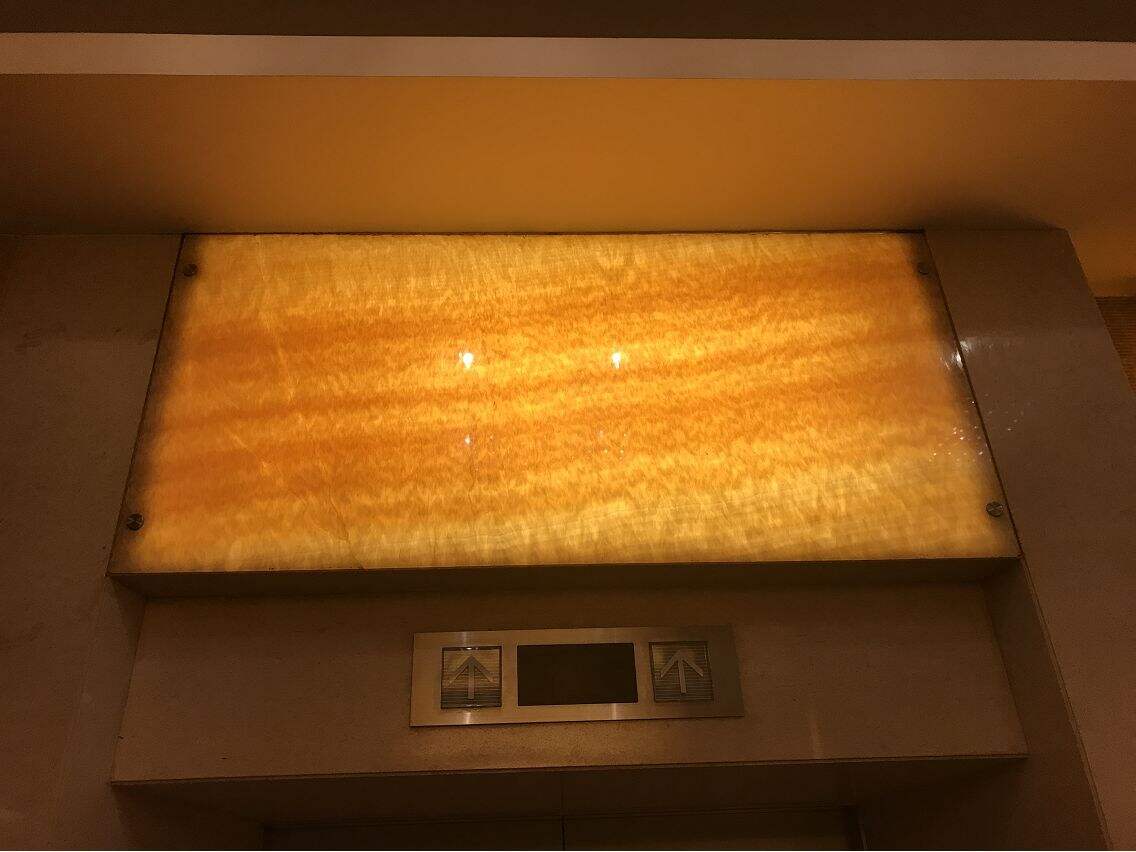
Material Science Foundations: Why Onyx Backlit Wall Panels Are Unique — and Fragile
Natural Onyx Mineral Structure and Inherent Brittleness
Natural onyx—a banded variety of chalcedony quartz—derives its luminous translucency and dramatic veining from tightly interlocked microcrystalline silica structures. Yet this same geology underpins its fragility: with a Mohs hardness of just 6–7, it lacks the compressive resilience of granite (6.5–7.5) or engineered stone. When cut to architectural thicknesses of 2–3 cm for backlighting applications, pre-existing micro-fissures become stress concentrators. Unlike ductile composites, onyx’s rigid crystalline network offers no plastic deformation before fracture—making it especially vulnerable to impact in high-vibration zones like elevator lobbies or seismically active regions.
How Backlighting Integration Affects Structural Integrity
Backlighting demands ultra-thin onyx panels (≤2 cm) to maximize light transmission—reducing flexural strength by over 60% compared to standard slabs. Precision CNC cutting introduces controlled micro-fractures at mounting points, while thermal cycling from adjacent LED systems induces repeated expansion-contraction stress. Polymer resins used to stabilize and bond onyx layers degrade under sustained heat exposure, accelerating embrittlement. As resin loses elasticity, mechanical stress propagates more readily through the stone matrix—particularly in environments with wide temperature swings. Long-term reliability hinges not on the material alone, but on installation methods that decouple thermal and mechanical loads, such as floating mounts with thermal break gaskets.
Performance in High-Humidity Environments: Bathrooms, Spas, and Wet Zones
Humidity, Thermal Cycling, and Sealant Longevity for Onyx Backlit Wall Panels
In humid interiors—especially steam rooms and spa wet zones—onyx backlit wall panels confront a dual threat: moisture ingress and thermal fatigue. Relative humidity above 60% drives water vapor into microscopic fissures, compromising both structural cohesion and electrical safety around integrated lighting. Simultaneously, thermal cycling from ambient fluctuations or nearby HVAC systems degrades edge sealants faster than static conditions. Premium silicone-based sealants retain flexibility for 18–24 months in continuous steam exposure, after which reapplication becomes critical. Primary failure points include panel-to-panel joints (where condensation pools), LED housing interfaces (prone to internal fogging), and adhesive bonds between backing substrates and stone (which weaken under combined thermal and hygric stress).
Real-World Validation: 3-Year Spa Installation Review (Austin, TX)
A monitored luxury spa installation in Austin, TX—subject to routine 80% RH and daily thermal swings—provides empirical insight into long-term performance:
| Metric | Year 1 | Year 3 | Change |
|---|---|---|---|
| Surface integrity | 100% | 92% | -8% |
| Sealant effectiveness | 100% | 75% | -25% |
| Luminance consistency | 98% | 85% | -13% |
Maintenance logs confirm sealant reapplication was required at 22 months—aligning with accelerated aging data for silicone under sustained humidity. While minor edge clouding occurred, no delamination or structural cracking was observed in the core stone. This case validates that peripheral components—not the onyx itself—are the first to degrade under humidity and thermal stress, and that proactive maintenance preserves functional and aesthetic performance in demanding wet environments.
Durability in Commercial Interiors: Lobbies, Hotels, and High-Traffic Applications
Surface Abrasion Resistance vs. Polished Vulnerability (Mohs Scale Insights)
Onyx backlit wall panels present a fundamental tension in commercial settings: their polished surface maximizes translucency and visual impact, yet simultaneously increases susceptibility to abrasion. With a Mohs hardness of only 3–4, natural onyx is significantly softer than common architectural surfacing materials—porcelain tile (7–8) and engineered quartz (7)—leaving it prone to micro-scratches from luggage wheels, service carts, and even frequent dry-dusting. In high-traffic hotel lobbies exceeding 1,000 daily passes, visible wear accumulates within 12–18 months without protective coatings or strategic placement away from contact zones. The polishing process, essential for optical clarity in backlighting, removes the stone’s naturally tougher outer layer, exposing more soluble and less durable subsurface crystals.
| Material | Mohs Hardness | Scratch Resistance in Commercial Settings |
|---|---|---|
| Porcelain Tile | 7–8 | Excellent (resists luggage/cart abrasion) |
| Engineered Quartz | 7 | Very Good |
| Natural Onyx | 3–4 | Moderate (shows wear in high-traffic zones) |
Light Exposure Effects: UV Stability and LED Backlighting Longevity for Onyx Backlit Wall Panels
Color Fading, Resin Yellowing, and Spectral Sensitivity
Natural onyx exhibits variable spectral sensitivity due to trace mineral inclusions—making it susceptible to uneven color fading under prolonged UV exposure, particularly in the 300–400 nm range. Resin binders used in laminated or stabilized onyx panels undergo photochemical degradation, with unprotected installations showing up to 15% annual yellowing in south-facing, unshaded applications. Modern LED backlighting mitigates much of this risk: its low-heat output reduces thermal aging, narrowband emission avoids damaging UV spectra, and dimmable intensity limits photon saturation. Still, panels near windows or beneath skylights require supplemental UV protection—such as polycarbonate laminates with integrated UV absorbers. Accelerated aging tests show these coatings preserve 92% of original color integrity after 10,000 hours of simulated sunlight exposure. When combined with humidity control and thermal management, UV filtering forms a critical layer of holistic protection—ensuring that aesthetic fidelity endures alongside structural function.
Frequently Asked Questions
What makes onyx backlit wall panels unique?
Onyx backlit wall panels are unique due to their dramatic veining, luminous translucency, and natural crystalline formations. Their aesthetic appeal is unmatched when combined with proper lighting.
Why are onyx panels considered fragile?
Onyx panels have a Mohs hardness of only 6–7 and are prone to fracturing due to their rigid crystalline structure. When cut thin for backlighting, their brittleness increases significantly.
How can onyx backlit panels endure in wet or humid environments?
Proper sealants, thermal break gaskets, and consistent maintenance—such as regular sealant reapplication—are essential to withstand humidity and temperature fluctuations.
How does UV exposure affect onyx panels?
UV exposure can lead to color fading and resin yellowing. Using UV-absorbing laminates and considering placement limitations can mitigate these effects.
How does traffic impact onyx panels in commercial settings?
High traffic leads to micro-scratches on polished onyx, as its Mohs hardness rate of 3–4 makes it susceptible to surface wear. Strategic placement and protective coatings can reduce damage.
Table of Contents
- Material Science Foundations: Why Onyx Backlit Wall Panels Are Unique — and Fragile
- Performance in High-Humidity Environments: Bathrooms, Spas, and Wet Zones
- Durability in Commercial Interiors: Lobbies, Hotels, and High-Traffic Applications
- Light Exposure Effects: UV Stability and LED Backlighting Longevity for Onyx Backlit Wall Panels
- Frequently Asked Questions