
 EN
EN

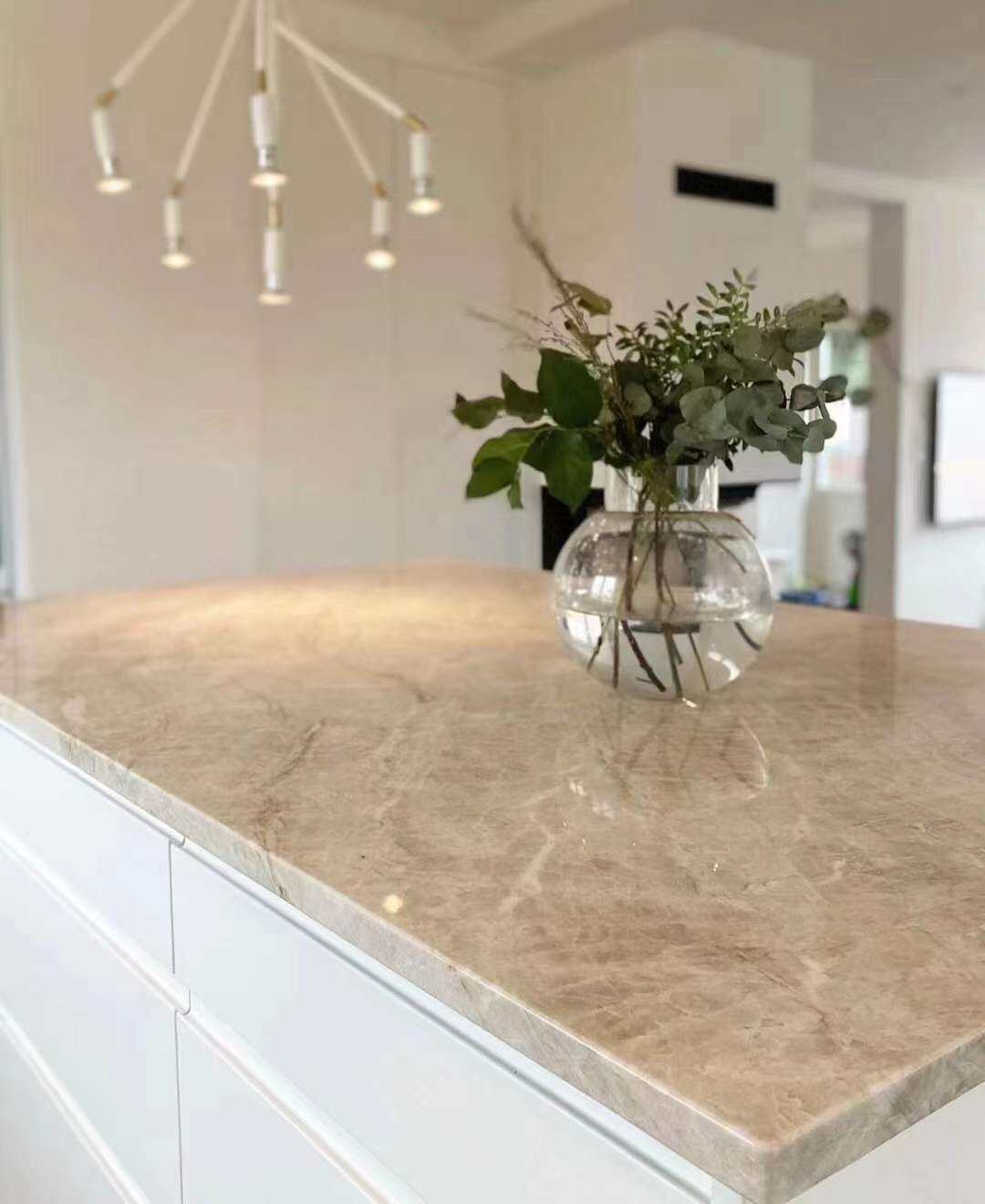
How Marble Kitchen Countertops Enhance Spatial Perception
Light reflection and luminosity: Expanding visual volume in open layouts
Marble countertops for kitchens work because of their crystal makeup, bouncing back around half the room's light compared to dull finishes. This brightness gives the impression that the space is bigger than it actually is, which really helps in those modern open floor plans where the eye travels past just the cooking area. Some interior design research indicates that shiny surfaces such as polished marble can trick small kitchens into looking maybe 15 percent bigger by breaking down what separates different parts of the home visually. What makes marble special is this natural sheen that cuts down on harsh shadows, so the dining room and living area don't feel so separate from where people cook anymore.
Veining as intentional rhythm: Guiding the eye across kitchen-dining-living zones
When choosing marble with different vein patterns, designers create natural lines of sight that link various parts of a space together. The bold flowing veins in Calacatta marble tend to draw eyes towards dining areas, whereas the softer streaks in Carrara keep things looking connected without making nearby living spaces feel cramped. Many interior designers actually rely on these stone patterns as sort of invisible guides. According to research published last year, around two thirds of people tested would follow those prominent veins from one room to another without even noticing they were doing it. Instead of walls or partitions, these geological features help define where each area starts and ends, all while keeping the overall space feeling open and continuous.
Seamless Integration of Marble Kitchen Countertops Across Open Spaces
Continuity strategies: Full-slab islands, waterfall edges, and integrated backsplashes
When kitchens feature full slab islands, they basically get rid of those annoying seams which makes everything look more cohesive in an open space setup. The waterfall edge effect takes countertop materials all the way down the sides of the island, creating something that looks like a real design statement between cooking area and living room. For backsplashes, many designers now integrate the same stone throughout both walls and countertops, cutting down on those pesky grout lines while letting patterns run uninterrupted. These kinds of seamless designs really make rooms feel bigger than they are, plus cleaning becomes less of a chore in busy spots where spills happen often. According to recent market research from last year, around three out of four homeowners actually want these integrated surfaces mainly because they're easier to keep clean. Waterfall edges still top the popularity charts too, not just for how they look but also because they help eyes move naturally through open floor plans without getting stuck at awkward transitions.
Material harmony: Pairing marble kitchen countertops with cabinetry, metals, and natural wood
When it comes to showing off the natural veins in marble countertops, cabinet color choices make all the difference. Light colored cabinets really bring out those dark gray patterns in the stone, whereas going with darker cabinetry actually makes white marbles stand out even more. The metal hardware selected also creates interesting contrasts. Brass fixtures tend to warm up what might otherwise feel like cold stone surfaces, while matte black handles give a contemporary edge to any setup. Adding natural wood elements brings some much needed balance to these spaces. Reclaimed oak shelves work wonders at softening the sometimes overly formal look of marble. According to research published last year, incorporating wooden accents can boost how warm a space feels by around two thirds. That's pretty impressive when considering just how impactful small design decisions can be.
| Material Pairing | Visual Effect | Functional Benefit |
|---|---|---|
| Light wood floors | Warms cool stone | Reduces slip hazards |
| Bronze fixtures | Enhances earthy veins | Resists fingerprints |
| Textured cabinets | Balances polished stone | Hides daily wear |
This harmony supports inviting transitions between functional zones—without sacrificing sophistication.
Marble Kitchen Countertops as Anchors for Aesthetic Cohesion
Marble kitchen countertops really stand out in open concept homes where they act as central design elements that tie together different parts of the space. The way the stone veins run through it creates patterns that naturally connect kitchens with dining rooms and living areas. These natural patterns actually help create focal points in a room, making sure everything looks connected rather than disjointed. Many interior designers will match those same vein colors in other parts of the house too, like couches, rugs, or even lighting fixtures, which helps everything feel more unified. Regular materials all look pretty much the same, but marble varies from piece to piece so no two installations ever look exactly alike, yet still work well with things like matte cabinets, metal finishes, or old wood accents. According to a survey from the National Kitchen & Bath Association back in 2023, around two thirds of designers choose natural stone because it brings different areas together in open floor plans. Proper placement makes these countertops do more than just sit there; they actually shape how people experience the space, transforming random rock formations into something intentional that leaves a lasting impression on whoever spends time in the main part of the home.
Balancing Beauty and Practicality: Durability and Maintenance in Active Open-Concept Homes
Etching, staining, and wear patterns: Evidence from high-traffic open-layout households
Kitchen marble countertops tend to show signs of wear much faster in open plan homes because they get so much attention and constant use. Those permanent dull patches from acids like lemon juice or vinegar appear sooner in houses where people cook and entertain regularly. Spills from oils, red wine, or coffee soak into the stone surface over time, especially around sink areas and stoves. According to industry data, homes with combined kitchen-living spaces see about 40% more etching problems than traditional layouts with separate rooms. Micro scratches build up quicker near food prep areas too, something seen in roughly three quarters of busy households after just three years since installation. While regular sealing helps cut down on stains, nothing stops acid damage completely. Marble owners should understand what's realistically possible for maintenance. Daily cleaning, catching spills fast, and getting professional sealant applied once a year keeps these beautiful surfaces looking good despite their natural weaknesses to certain substances.
FAQ
What are the benefits of using marble countertops in open kitchen spaces?
Marble countertops enhance the spatial perception by reflecting light, creating the illusion of a larger space, and integrating seamlessly into open layouts. They also provide visual continuity and aesthetic cohesion.
How do marble countertops help in connecting different areas in open concept homes?
The natural veining in marble acts as invisible guides, creating visual links across the kitchen, dining, and living areas. This helps maintain an open and continuous feel in the space.
What are the maintenance challenges of marble countertops in high-traffic kitchens?
Marble is prone to etching, staining, and wear, especially in busy kitchens. Regular sealing, immediate cleaning of spills, and annual professional maintenance are recommended to preserve the beauty of marble surfaces.