
 EN

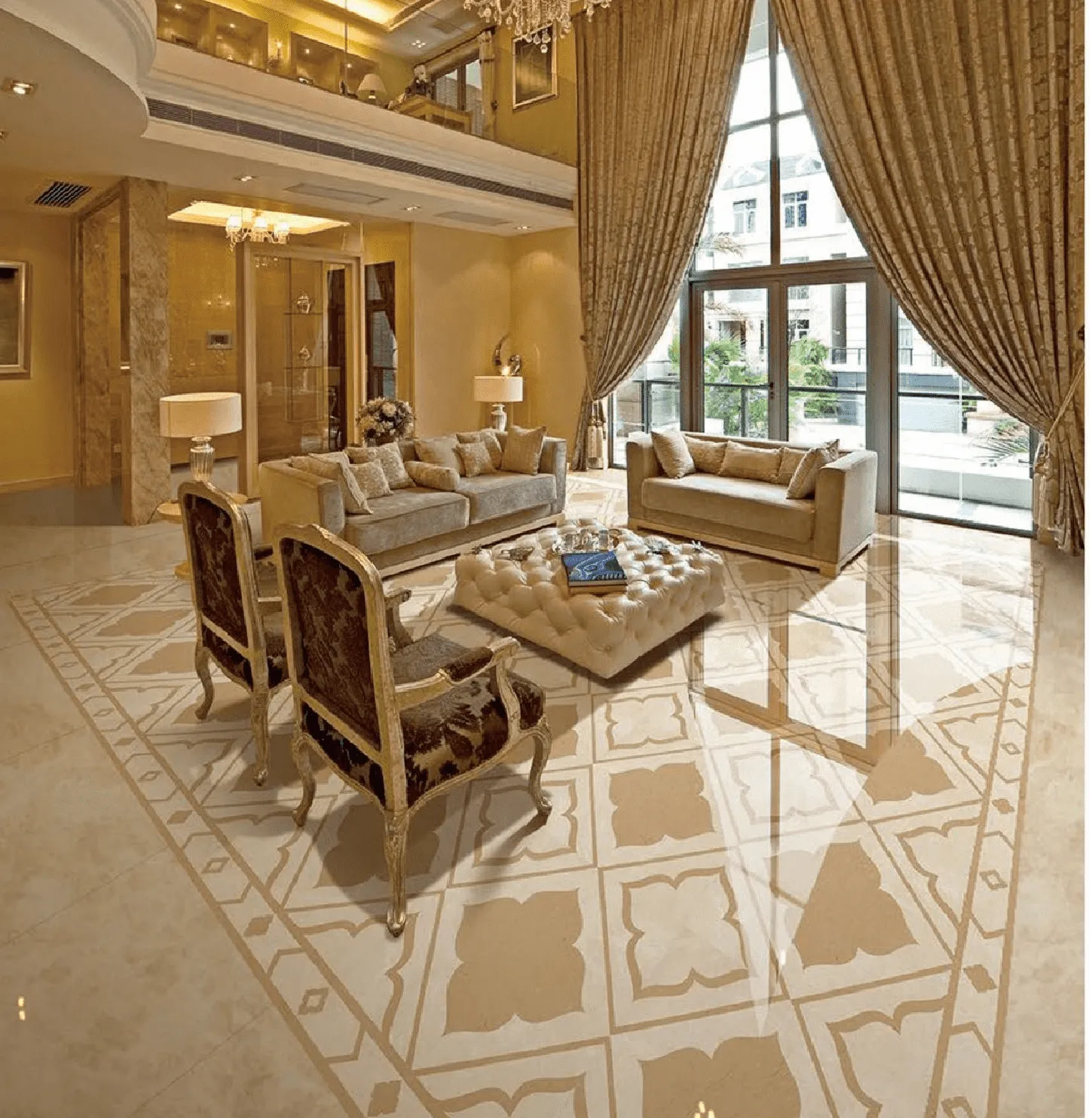
Composition — what each material actually is
Natural marble tile: calcite and limestone under heat and pressure
When a project team evaluates flooring, the first question is whether a natural marble tile or an engineered alternative suits the space. Natural marble forms when limestone and calcite recrystallize under geological heat and pressure over millions of years. That slow formation gives the stone a dense, crystalline structure composed almost entirely of calcium carbonate. The result is a material quarried as block, then cut and polished into tiles. Each tile carries the mineral history of its source bed, which is why no two surfaces look identical even from the same quarry. Quarried blocks vary in density, so absorption testing matters when comparing lots.
Artificial marble: resin-bound aggregates and agglomerated stone
Artificial marble, often called agglomerated stone, is manufactured rather than quarried. Crushed natural stone fragments — marble, quartz, or granite chips — are bonded with polyester or acrylic resin under vacuum and vibration, then cured into slabs and cut to size. The resin works as the glue that fills the gaps between aggregates, producing a non-porous, uniform panel. Because the binder is synthetic, the slab's behavior depends less on geology and more on the resin ratio and curing process. This is the core reason engineered surfaces resist liquid penetration yet soften under high heat. Unlike natural marble, the resin-bound panel hides stone content behind a uniform face.
Performance — why each behaves differently
Porosity and stain resistance
Porosity decides how a floor reacts to spills. Natural marble is permeable because its calcite crystals contain micro-pores that pull in colored liquids. A dropped coffee or wine can leave a permanent mark unless a penetrating sealer blocks the pores. Agglomerated stone, by contrast, has near-zero porosity thanks to the resin matrix, so stain resistance is naturally higher for everyday soils. However, the sealer on natural marble tile is renewable: a fresh coat restores protection, whereas a stained resin panel is harder to rescue. Specifiers should match porosity to traffic and cleaning discipline. Most lobbies re-seal natural stone every one to two years depending on traffic.
Heat tolerance and repairability
Natural marble handles thermal load well because it is inorganic and stable; a hot planter or sunlight through a lobby window will not soften it. Resin-bound agglomerated stone can discolor or warp above roughly 150°C, since the binder is plastic-based. Repairability also differs. A natural surface with a chip can be filled and re-polished to near-invisible, while a burned resin panel may need full section replacement. For spaces with heat sources, the inorganic option is the safer long-term choice. Natural stone also tolerates freeze-thaw cycles better because it holds no organic binder to break down.
Appearance and consistency
Unique veining versus consistent pattern
Look is where preference drives the decision. Natural marble shows veining formed by mineral veins moving through the bed — each tile is a one-off, so a floor gains depth and a sense of place. Engineered stone offers a consistent pattern across batches, which helps when a design needs repeatable visual rhythm. The trade-off is authenticity: the unique veining of natural material cannot be reproduced, while the uniform look of agglomerated stone gives predictable, brand-friendly consistency for standardized interiors. Large projects sometimes book-match adjacent tiles so the veining reads as one continuous drawing across the floor. That technique works only with the natural material, never with a printed consistent pattern.
Color consistency across large areas
Large floors expose the consistency gap most clearly. Natural marble shifts tone slightly between quarry blocks, so a buyer accepts gentle variation as character. Agglomerated stone holds a tighter color band across thousands of square meters, which suits branded chains that need identical stores. The choice reflects whether the project celebrates natural variation or demands repeatable uniformity.
A specifier's scenario and procurement fit
Choosing for a commercial lobby floor
Consider a specifier selecting surfaces for a commercial lobby floor in a busy mixed-use building. The brief asks for elegance but expects heavy foot traffic, rolling luggage, and frequent cleaning. Natural marble tile delivers the prestige veining clients notice, yet it demands a sealed, maintained program to control porosity and etching from acidic cleaners. Agglomerated stone tolerates the cleaning cycle with less upkeep but risks heat from spot lighting and lacks the genuine stone story. The specifier weighs footfall, maintenance budget, and brand intent before committing. After weighing both, the specifier chose sealed natural marble for the main threshold where first impressions matter, and used agglomerated stone in the back-of-house corridors where upkeep budgets were tight. The lobby kept its stone story while cleaning costs stayed predictable.
Standards and cost considerations
Standards help turn opinion into specification. Natural marble is specified under ASTM C503, which defines the material and its physical limits for dimension stone. Agglomerated stone is governed by EN 14617 for test methods and EN 15285 for slabs intended for internal flooring and wall use. These standards let a buyer verify flexural strength, absorption, and abrasion before purchase. On cost, natural marble carries quarry and sorting premiums; agglomerated stone often lands at a steadier price because production is controlled. The right pick follows the application. Pair the standard with a maintenance plan so performance holds after installation.
Choosing between the two returns to use and intent. A natural marble tile offers genuine stone character, repairable surfaces, and heat stability, while agglomerated stone brings consistency, low porosity, and easier upkeep. For a commercial lobby floor, traffic, maintenance discipline, and design story decide the winner. Verify claims with ASTM C503 and EN 14617, plan sealing for natural material, and confirm heat exposure for resin panels. The material that fits the building's life cycle serves the project longest. Neither material is universally right; the building's routine decides. Specifiers who test a sample under real cleaning and load conditions avoid surprises after handover.
Frequently Asked Questions
Question
What is the main composition difference between natural and artificial marble tile?
Answer: Natural material is quarried calcite and limestone recrystallized by geology, while artificial panels bond stone chips with polyester or acrylic resin. The resin matrix fills gaps, lowering porosity but adding heat sensitivity. Composition drives every performance gap that follows, from stain behavior to repair method. Specifiers read composition first to predict how the surface will age under real building use.
Question
Why does natural marble stain more easily than agglomerated stone?
Answer: Micro-pores in calcite crystals draw in colored liquids, so a spill can etch or mark an unsealed surface. Agglomerated stone relies on a resin matrix with near-zero porosity, blocking most everyday soils. A penetrating sealer renews protection on natural material, but a burned or deeply stained resin panel is harder to rescue. The gap is structural, not cosmetic.
Question
How should a lobby floor be maintained over time?
Answer: Natural stone needs a sealed program with pH-neutral cleaners and re-sealing every one to two years based on traffic. Agglomerated stone tolerates frequent washing with less upkeep but still avoids abrasive pads that dull the face. Daily dust removal protects against grit scratching. Document the routine so custodial staff apply the same method and the floor keeps its intended appearance.
Question
Can artificial marble handle the same heat as natural stone?
Answer: Resin-bound panels soften or discolor above roughly 150°C because the binder is plastic-based, while inorganic natural stone stays stable near heat sources and tolerates freeze-thaw cycles. Spot lighting, hot planters, or kitchen pass windows create risk for artificial panels. For zones with heat exposure, the inorganic option is the safer long-term choice and avoids section replacement after damage.
Question
Which standard applies when specifying these surfaces?
Answer: Natural marble follows ASTM C503 for material definition and physical limits, with ASTM C97 covering absorption. Agglomerated stone is tested under EN 14617 for methods and EN 15285 for internal flooring and wall slabs. These standards let a buyer verify flexural strength and abrasion before purchase. Always request a mill certificate so claims match the delivered lot.