
 EN
EN

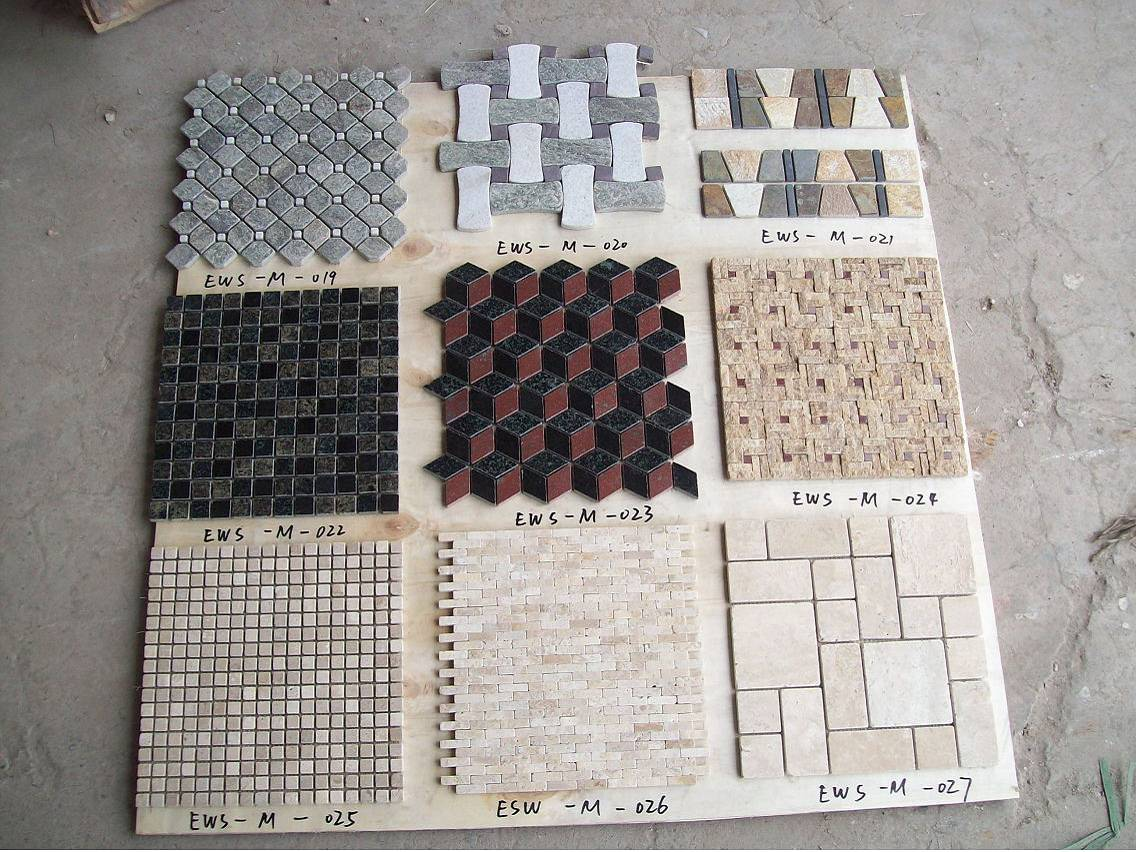
Top Certified Suppliers of Custom Stone Mosaic Tiles for Shower Walls
Reputable Online & Local B2B Suppliers Offering True Custom Sizing (Not Just Cut-to-Size)
True custom sizing means the supplier fabricates mosaic sheets to your exact specifications—non-standard dimensions, unique stone shapes (e.g., 1″×2″ herringbone or 3/4″ penny rounds), and precise thicknesses—using CNC waterjet or bridge saw technology directly from raw slabs. This differs fundamentally from “cut-to-size” services that simply trim standard 12″×12″ sheets, which limits design flexibility and increases on-site waste.
A 2023 survey by the Natural Stone Institute found that 85% of professional installers prefer custom-sized mosaic sheets, citing up to 30% less material waste and faster, cleaner installations (NSI 2023). Leading suppliers work with marble, travertine, onyx, and limestone—and provide material certificates, dye-lot consistency guarantees, and physical samples upon request. Verified B2B platforms like the Stone World fabricator network list suppliers offering digital templating and CAD-driven design reviews. Local quarries with in-house fabrication often deliver shorter lead times and direct technical support. Always request a full-scale mock-up and confirm the mesh backing is waterproof polypropylene—engineered specifically for wet-area use—not generic fiberglass.
Key Certifications to Verify: ASTM C1567 Compliance, Waterproof Mesh Backing, and Freeze-Thaw Resistance
Certifications are non-negotiable for shower applications. ASTM C1567 compliance ensures the mortar and grout system has been tested for alkali-silica reactivity—a critical safeguard against pop-outs and cracking in dense stones like marble (ASTM International 2024). Equally vital is the mesh backing: only waterproof polypropylene (not standard fiberglass) prevents moisture wicking behind tiles, which can fuel mold growth. A 2022 TCNA field report linked non-waterproof mesh to a 40% higher failure rate within five years (TCNA 2022).
Freeze-thaw resistance—verified by ASTM C97 or C1026—is essential even for interior showers in unheated spaces or seasonal homes, where trapped moisture may expand and spall the stone surface. Reputable suppliers supply third-party test reports for all three criteria. Before ordering, verify the stone’s absorption rate is ≤0.5% (per ASTM C97) for freeze-thaw-prone settings and confirm the mesh adhesive is alkaline-resistant to withstand thin-set exposure during installation.
Designing with Stone Mosaic Tiles: Optimal Sizes, Layouts, and Wet-Area Best Practices
Shower-Specific Size Guidance: Why 1"×1", Hex, and Linear 3/4"×6" Stone Mosaic Tiles Maximize Grout Joint Control & Drainage
For shower floors, tile format must accommodate the required 1/4-inch-per-foot slope toward the drain without lippage or water pooling. Small-format mosaics—1″×1″ squares, hexagons, and linear 3/4″×6″ strips—conform reliably to convex and concave contours thanks to flexible mesh backing. Their high grout-joint density enhances slip resistance and creates micro-channels that actively direct water toward the drain.
Hexagonal mosaics offer interlocking geometry that distributes pressure evenly and delivers up to 30% more grout lines than square tiles of equivalent coverage—boosting both safety and drainage efficiency. Linear 3/4″×6″ tiles, installed running toward the drain, visually reinforce water flow while lending a sleek, elongated aesthetic that expands perceived space. Industry data shows tiles under 2 inches increase coefficient of friction by over 40% compared to larger formats—significantly reducing slip risk in wet conditions.
Why Natural Stone Mosaic Tiles Outperform Ceramic in Shower Walls
Porosity, Sealing Protocols, and Long-Term Moisture Resistance (ASTM C97 Data vs. Industry Benchmarks)
Natural stone mosaic tiles typically absorb ≤0.5% water under ASTM C97 testing—far lower than ceramic’s industry-standard 3–7% absorption (ASTM C97, 2023). This low porosity inherently limits moisture retention, but consistent sealing remains essential. A penetrating, solvent-based sealer applied during installation—and reapplied every 12–24 months—forms a durable hydrophobic barrier that prevents staining, etching, and microbial infiltration.
In contrast, ceramic installations rely heavily on grout integrity; unsealed or degraded cementitious grout readily absorbs moisture, leading to efflorescence, discoloration, and eventual tile loosening. Over a 10-year lifecycle, properly sealed stone mosaic maintains structural integrity, color fidelity, and surface texture far more reliably than ceramic in continuously wet environments—reducing long-term maintenance and replacement costs.
Installation Essentials for Stone Mosaic Tiles in Showers
A flawless installation transforms stone mosaic from aesthetic choice into a durable, watertight system. Begin with a clean, level, and fully waterproof substrate: apply a liquid-applied or sheet membrane across the entire shower enclosure, extending at least 6 inches above the showerhead pipe. Use a polymer-modified thin-set meeting ANSI A118.4 or A118.15 for wet areas, applied with a 3/16-inch V-notch trowel. Back-butter each mosaic sheet to fill mesh voids, then press firmly into place using a rubber float—ensuring full mortar contact without forcing adhesive into grout lines.
Maintain the required 1/4-inch-per-foot slope on shower floors. After 24–48 hours of cure, grout with epoxy—superior to cementitious grouts for mold resistance, stain prevention, and long-term joint integrity in constant moisture. Finish with a penetrating silane/siloxane sealer on both stone and grout, following the manufacturer’s reapplication schedule. Clean routinely with pH-neutral stone cleaners, and address cracked grout or worn sealant immediately to preserve performance for decades.
FAQ Section
What is true custom sizing for stone mosaic tiles?
True custom sizing means fabricating mosaic sheets to your exact specifications, including non-standard dimensions, unique shapes, and precise thicknesses, rather than simply trimming standard sheets.
Why are certifications like ASTM C1567 and waterproof mesh backing important?
These certifications ensure the tiles are resistant to alkali-silica reactivity, moisture, and freeze-thaw cycles, which can cause cracking, mold growth, and spalling over time.
Which tile formats are best for shower floors?
Small-format mosaics like 1″×1″ squares, hexagons, and linear 3/4″×6″ strips are ideal for shower floors due to their ability to conform to slopes and enhance grout-joint density.
How often should stone mosaic tiles be sealed?
Stone mosaic tiles should be sealed during installation and reapplied every 12–24 months to maintain moisture resistance and prevent staining or microbial infiltration.