
 EN
EN

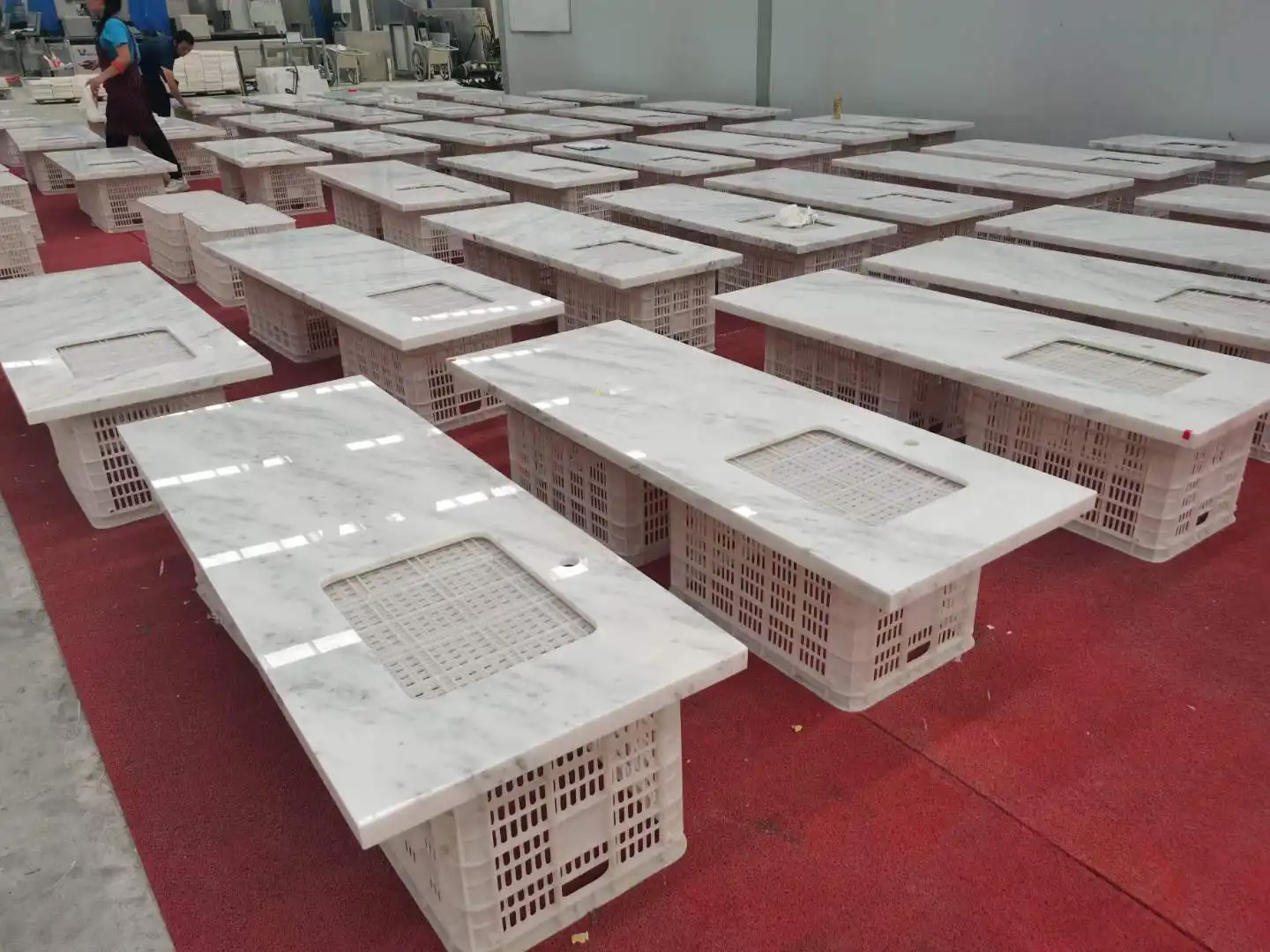
Carrara marble vanity tops bring a soft, timeless look to bathrooms, but durability is the real question for daily use. Many homeowners love the grey-veined white stone yet worry about scratches, stains, and dull spots. Honest performance under real bathroom conditions depends on acid exposure and routine care. With the right sealing and cleaning habits, the material performs well for years. The key is understanding what harms it and building a simple maintenance routine around that knowledge.
Why Carrara Marble Behaves Differently at the Vanity
Why Carrara Etches When Acid Touches the Surface
Carrara marble vanity tops are made of metamorphic limestone rich in calcite, a crystalline form of calcium carbonate. When lemon juice, vinegar, or toothpaste meets the surface, the acid reacts chemically with calcite and dissolves a microscopic layer. This reaction leaves a matte, lighter patch called etching that no polish can simply wipe away. The damage is not a stain but a physical change in the stone. Understanding this chemistry explains why even a brief spill can mark the stone, and why immediate rinsing matters more than scrubbing later.
Calcite and the Honed Finish
The honed finish is a popular choice for bathroom surfaces because it hides etching better than a glossy polish. A honed surface scatters light evenly, so a mild acid mark blends in rather than flashing bright against a mirror shine. Calcite grains remain the same beneath either finish, which means acid sensitivity does not change with texture. A honed finish simply makes small imperfections less obvious to the eye. Specifiers often choose honed Carrara for vanities precisely because daily wear looks gentler on a matte face than on a reflective one. For these reasons, carrara marble vanity tops remain a favorite in design-led homes.
Stain Resistance Versus Acid Sensitivity
Natural stone resists many water-based spills thanks to low porosity when sealed, yet acid sensitivity remains its weak point. Oil, makeup, and hair dye can still penetrate if the protective layer fails. Stain resistance therefore depends on the quality of the penetrating sealer and how recently it was applied. A sealed Carrara top shrugs off most bathroom moisture, but it cannot stop a citric cleaner from reacting with calcite. Professionals reference ASTM C97 absorption values when selecting a slab with naturally lower porosity. Buyers should separate the two risks: staining is manageable, etching is permanent without refinishing. Properly maintained carrara marble vanity tops keep their charm despite this limitation.
Daily-Use Risks in a Residential Master Bathroom
Cosmetics, Toothpaste, and Citrus Exposure
Picture a residential master bathroom where two people use the vanity every morning. Toothpaste flecks, facial toner, and the occasional lime in a water glass all land on the stone. Cosmetics with citric acid or alcohol strip the sealer faster than plain water. Toothpaste contains mild abrasives and weak acids that slowly dull the surface. None of these events causes instant ruin, but repeated contact without prompt cleaning builds a map of faint etch marks. The risk is cumulative, not dramatic. Most carrara marble vanity tops in daily homes show etch marks within the first year if left unsealed.
A Realistic Daily Maintenance Plan
A practical maintenance plan keeps the vanity presentable without obsession. Rinse the surface with water after each use and dry with a soft cloth to remove residue. Once a week, wipe with a pH-neutral cleaner made for natural stone and avoid anything lemon-scented or vinegar-based. Keep a small tray for toiletries so bottles never sit in puddles. Every few months, test the seal by dropping water on the stone; if it darkens and soaks in, reseal. This rhythm fits real family life and prevents most damage before it starts. Families who follow this approach keep carrara marble vanity tops looking fresh for years.
Sealing Frequency With a Penetrating Sealer
A penetrating sealer soaks into the pores and forms an invisible barrier against moisture and oil. In a busy bathroom, plan to reseal every six to twelve months depending on usage and product quality. Light-colored Carrara shows wear sooner than darker stones, so check the surface twice a year. Reapplication is quick: clean, let dry, roll on the sealer, and buff. Regular sealing does not stop etching, but it preserves stain resistance and makes the stone easier to keep clean between refinishing sessions.
Carrara Marble Compared With Quartz and Engineered Stone
Where Quartz Performs Better
Quartz and other engineered stone win on acid resistance because they contain bonded resin and crushed mineral rather than solid calcite. A splash of vinegar or perfume will not etch them, and they need almost no sealing. For a household with children or heavy cosmetic use, quartz demands less attention. Engineered slabs also offer consistent color and predictable performance. The trade-off is a manufactured appearance that some designers feel lacks the depth and movement of real marble veins that shift across each slab. Buyers weighing carrara marble vanity tops against quartz should weigh lifestyle first.
Where Natural Stone Remains Competitive
Natural stone still earns its place where character and value matter. Each Carrara slab carries unique veining no factory can replicate, and the stone stays cool and pleasant underfoot and to the touch. With honest care, a marble vanity ages into a lived-in patina that many owners prefer over a static surface. For lower-traffic powder rooms or design-led projects, the look outweighs the maintenance. Specifiers who disclose the etching reality upfront build trust and happier long-term clients than those who overpromise.
Summary
Carrara marble vanity tops are durable enough for daily bathroom use when owners accept one truth: the stone etches from acid and needs steady maintenance. A honed finish, a quality penetrating sealer, and pH-neutral cleaning handle most risks. Quartz avoids etching but loses natural depth. Choose marble for beauty and character, then protect it with a simple routine, and the vanity will serve a busy household for many years.
Frequently Asked Questions
Question
Why do carrara marble vanity tops etch when lemon juice spills on them?
Answer: Carrara marble is composed largely of calcite, a form of calcium carbonate that reacts with citric acid. The acid dissolves a thin surface layer of the stone, leaving a dull, lighter patch known as etching. This is a physical change, not a stain, so it cannot be cleaned away. Prompt rinsing with water limits the reaction. A honed finish helps disguise minor etch marks better than a polished one.
Question
How often should a marble vanity be sealed?
Answer: In a daily-use bathroom, apply a penetrating sealer every six to twelve months. Light-colored Carrara shows wear sooner, so inspect the surface twice a year by dropping water on it; if the stone darkens, reseal. A well-sealed top resists oil and moisture but still etches from acid. Regular sealing maintains stain resistance and keeps the vanity easier to clean between professional refinishing visits.
Question
Can quartz replace marble for a bathroom vanity?
Answer: Quartz and engineered stone resist acid and need almost no sealing, making them lower-maintenance for busy households with children or heavy cosmetic use. They lack the natural veining depth of Carrara, offering a more uniform look. Marble provides unique character and a cooler touch that many designers value. The right choice depends on whether the priority is minimal upkeep or distinctive natural appearance in the space.
Question
What cleaner is safe for a Carrara vanity?
Answer: Use only a pH-neutral cleaner formulated for natural stone, applied with a soft cloth or sponge. Avoid vinegar, lemon, and any citrus-scented product because the acid etches calcite. Rinse with plain water after each use and dry the surface to prevent residue buildup. Mild dish soap diluted in water works in a pinch. Harsh or abrasive cleaners should stay away from the marble to preserve the honed finish.
Question
Does a honed finish prevent etching on marble?
Answer: A honed finish does not stop acid from reacting with calcite, so etching still occurs on contact. It does make marks less visible by scattering light evenly across a matte face, unlike a glossy polish where etch spots flash brightly. Choosing honed Carrara is a smart way to soften the look of daily wear. Combine it with prompt rinsing and periodic sealing for the most forgiving appearance in a working bathroom.