
 EN
EN

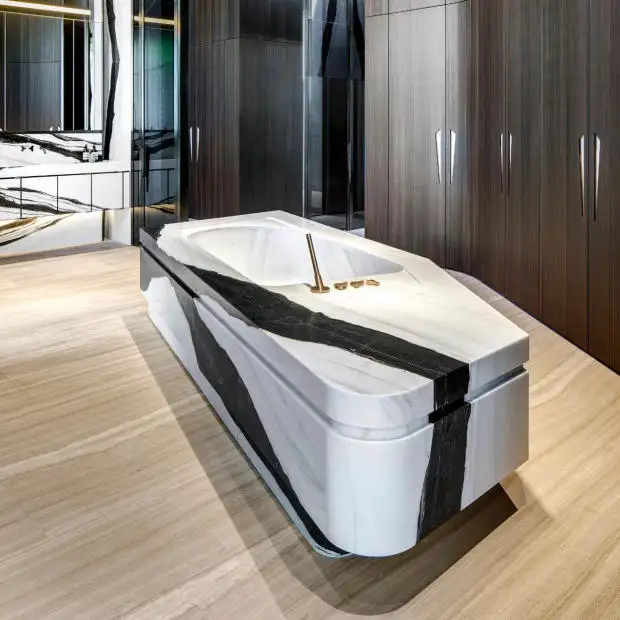
White marble cladding brings a clean, luminous look to interiors, yet many owners watch their panda white walls drift toward a dull yellow within a few years. The shift is rarely caused by surface dirt alone. Most discoloration stems from chemistry inside the stone and from how the surface is treated after installation. Understanding those mechanisms is the first step toward keeping the material bright for the long term.
Why Panda White Marble Walls Discolor
White marble is not a uniform block of calcite; it carries minerals laid down when the rock formed. Three internal and external forces do most of the visible damage.
Iron oxidation is the hidden driver
Panda white walls often yellow because the stone contains trace iron within its calcite matrix. When moisture reaches those iron particles, oxidation begins and the metal converts to ferric compounds that read as brown or yellow stains. This reaction is slow but persistent, and it accelerates in humid rooms where water vapor keeps moving through the marble. Specifiers should request dry, well-stored slabs and verify absorption values against ASTM C97 before the material is fixed to a wall. Early diagnosis matters because oxidized iron is hard to reverse once it spreads below the surface.
UV exposure and trapped polishing compound
Sunlight is another antagonist. UV exposure breaks down surface coatings and gradually shifts the tone of a polished face, especially near windows and skylights. A second, overlooked cause is residual polishing compound left in the stone during fabrication. Fine abrasive powders and wax residues settle into open pores; over time they oxidize or attract grime, producing a gray-yellow haze. Thorough neutral cleaning and a test patch before full sealing reduce this risk on panda white walls.
Moisture and Efflorescence in Humid Climates
Water is the messenger that carries trouble into the wall. In bathrooms, spas, and coastal buildings, vapor moves through marble cladding from the back side, drawn by differences in humidity and temperature. Once water touches the iron specks, oxidation speeds up. Poor substrate prep, missing waterproofing, or rising damp behind the wall all feed the cycle.
How moisture moves through marble cladding
Marble is permeable. Moisture enters from grout lines, unsealed edges, or a wet backing, then travels through the slab by capillary action. A breathable installation with a proper drainage plane lets the assembly dry instead of holding water against the stone. Controlling the source beats repeated surface wiping every time.
Efflorescence leaves a yellow film
Efflorescence forms when dissolved salts are carried to the surface and left behind as water evaporates. On pale marble the deposit looks like a faint yellow or chalky film that dulls the original brightness. Calcite is sensitive to alkaline salts, so the damage is both cosmetic and structural over time. The real fix is to stop the water source behind the wall and improve drainage, which protects the cladding rather than only scrubbing the visible face.
Prevention Through Sealing and Daily Care
Prevention should be treated as a system: block water, move air, and clean gently. No single product solves yellowing, but the right combination keeps the stone pale for years.
Choose an impregnating sealer and honed finish
Sealing is the most reliable defense. An impregnating sealer penetrates the stone and bonds inside the pores, blocking water without building a surface film that can yellow on its own. For vertical panda white walls in bright or wet areas, a penetrating product rated for natural stone is preferred over topical coatings. A honed finish hides minor tone changes better than a mirror polish and shows less reflection of any haze. Pair the sealer with a low-absorption installation to slow iron oxidation at the source.
Ventilation and pH-neutral cleaning
Air movement is free prevention. Steady ventilation keeps humidity down so moisture cannot travel through the cladding and trigger discoloration. For routine care, use a pH-neutral cleaner made for natural stone; acidic liquids such as vinegar, lemon, or descaling sprays attack calcite and open the surface to stains. Soft tools and a clean water rinse remove dust without abrasion. A simple log of cleaning dates helps facility teams protect panda white walls consistently across large buildings.
A Coastal Villa Case and a Maintenance Schedule
Real projects show how the causes and fixes connect. A clear example comes from a humid site where the problem was caught and corrected.
How a yellowed lobby was restored
Consider a humid coastal villa whose entrance lobby was clad in white marble. Within two seasons the lower wall panels turned yellow, worst near the open doors where sea air and moisture entered. Diagnosis pointed to iron oxidation fed by rising damp plus residue from the original polishing compound. The team stripped the wax with a neutral wash, improved sub-wall ventilation, and applied an impregnating sealer after the stone dried fully. Within weeks the panda white walls regained their pale tone, and a quarterly inspection now keeps the result stable.
A practical maintenance schedule
A repeating plan turns correction into prevention. Daily: dust and spot-clean with a pH-neutral cleaner. Weekly: wipe high-touch zones and check for new yellow patches. Quarterly: inspect sealer performance, especially near doors and bathrooms, and reapply impregnating sealer where water beads no longer form. Annually: have a stone specialist review the marble cladding and document any efflorescence. This schedule catches iron oxidation early and protects the investment without aggressive chemicals.
Keeping panda white walls bright is less about a single product and more about controlling water, air, and chemistry together. Iron oxidation, UV exposure, trapped polishing compound, and moisture-driven efflorescence each push the stone toward yellow, but sealing with an impregnating sealer, choosing a honed finish, improving ventilation, and using a pH-neutral cleaner reverse the trend. A steady maintenance schedule makes the result durable. For specification support on natural stone projects, NatureMarble.com supplies directly from its own factories and quarries, established in 2005 with ISO 9001 and ISO 14001 certification.
Frequently Asked Questions
Question
Why do white marble walls turn yellow even without visible dirt?
Answer: Yellowing usually comes from inside the stone rather than surface soil. Trace iron within the calcite oxidizes when moisture reaches it, producing brown-yellow stains. Residual polishing compound and UV exposure add to the shift. A neutral wash plus an impregnating sealer addresses the cause instead of only cleaning the face.
Question
Can an impregnating sealer stop panda white walls from yellowing?
Answer: An impregnating sealer greatly slows yellowing but does not reverse existing iron oxidation. It penetrates the stone and blocks water that would otherwise feed the reaction, so new stains form far more slowly. Performance depends on a dry substrate and periodic reapplication. Pair it with ventilation and a pH-neutral cleaner for reliable, long-lasting protection on vertical marble.
Question
How does efflorescence affect white marble cladding?
Answer: Efflorescence forms when dissolved salts rise to the surface and remain after water evaporates. On pale marble the deposit reads as a chalky yellow film that hides the stone's brightness. Calcite reacts with alkaline salts, so the harm is cosmetic and structural over time. The fix is to stop the water source behind the wall and improve drainage rather than repeatedly scrubbing the visible face.
Question
Which cleaner is safe for natural stone walls?
Answer: Use a pH-neutral cleaner formulated for natural stone. Acidic products such as vinegar, citrus, or descaling liquids attack calcite and etch the surface, opening pores to stains. Mild soap diluted in water works for light dust, while a soft cloth avoids abrasion. Rinse with clean water and dry the area. Regular gentle care protects the finish and extends sealing treatments.
Question
What maintenance schedule keeps marble walls bright?
Answer: Dust and spot-clean daily with a pH-neutral product. Weekly, wipe high-touch zones and look for new yellow patches. Every quarter, test the sealer by sprinkling water; if it soaks in, reapply an impregnating sealer. Annually, ask a stone specialist to review the cladding and record any efflorescence. This routine catches iron oxidation early and avoids harsh corrective chemicals.