
 EN
EN

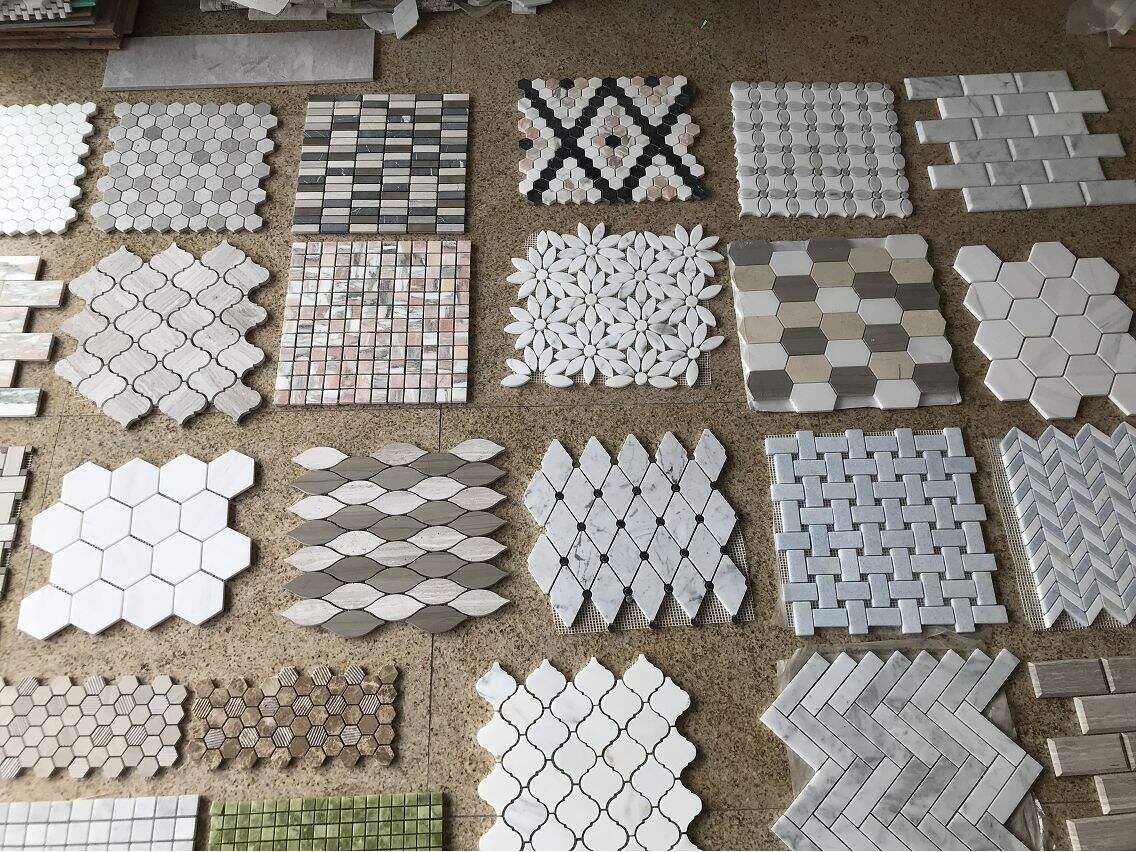
Stone Mosaic Tiles in Interior Spaces: Luxury, Function, and Spatial Impact
Bathrooms and Kitchens: Where Marble and Travertine Mosaics Deliver Style and Stain Resistance
Marble and travertine mosaic tiles add a touch of classic beauty to bathroom floors and kitchen backsplashes, plus they stand up pretty well to daily wear and tear. Seal them right and these stones won't absorb much water, oil, red wine or whatever gets spilled during dinner prep. They keep looking good for years because their surfaces stay clear and strong. These stones handle heat changes really well too, so they don't crack in steamy shower areas or around hot stove tops. People often mention how pleasant it feels walking barefoot on these cool, smooth tiles even when humidity levels are high. According to some research from last year, natural stone mosaics still resisted stains at about 97% effectiveness after five whole years of use, which beats most manmade options out there. This happens naturally thanks to those tight crystal formations inside the stone that just push away dirt without needing special protective layers.
Flooring, Shower Walls, and Accent Features: Defining Zones with Texture and Scale
The way stone mosaic tiles affect how we experience space comes down to their textures, sizes, and surface treatments. Small pieces like those hexagonal basalt tiles work great for marking out wet areas in bathrooms since they naturally resist slipping, whereas bigger mosaic sections on shower walls or accent walls really stand out in small spaces and draw attention upward. When different sized tiles are mixed together, they actually help direct where people walk and look. Think about a path made of river rocks leading someone through an entrance area, or maybe honed marble edges surrounding a fireplace or built-in cabinets. According to some research from 2022, most people (around 78%) felt that rooms decorated with mosaics looked significantly bigger, sometimes even appearing 30% more roomy. The various finishes available too polished, tumbled, or flamed surfaces help separate different parts of a home without making things look cluttered visually.
Stone Mosaic Tiles for Exterior Applications: Weather-Resistant Beauty and Safety
Pool Decks, Patios, and Walkways: Performance Against UV, Chlorine, and Freeze-Thaw Stress
Outdoor stone mosaic tiles stand up really well to weather thanks to their natural toughness from being formed deep underground over millennia. Materials like quartzite and granite don't fade under sunlight, won't absorb pool chemicals, and hold up against salty air near beaches - which is why we see them so often on poolside areas and seaside patios. For colder regions, certain types such as basalt and slate work great since they can handle repeated freezing and thawing that happens when temperatures fluctuate dramatically throughout the year. When installed correctly using flexible glue and good drainage systems, these tiles actually move with whatever surface they're placed on without cracking or coming loose. After sitting outside for about five years, tests show most of these stones still have water absorption rates under half a percent, meaning they keep looking beautiful and functioning properly season after season.
Thermal Stability and Natural Traction: Why Basalt and Limestone Mosaics Excel Outdoors
When it comes to materials for outdoor spaces, basalt and limestone really shine not only because they look good but also because they perform exceptionally well. Basalt has this unique volcanic structure that gives it amazing thermal stability. The material doesn't expand or contract much even when hit by strong sunlight, so decks made from it stay flat without warping over time. Limestone is another great choice too. Its naturally textured surface provides slip resistance ratings above R10 when wet, which actually meets those important international safety standards needed around pools and garden paths. Both stones have their advantages worth noting. They conduct heat poorly, keeping surfaces cooler to touch. Their compressive strength goes well beyond 100 MPa, and they manage moisture pretty well through natural porosity. All these characteristics mean safer installations that last for ages. Most people find that with regular cleaning and care, these materials can easily last over 15 years before needing replacement.
Material Science Behind Stone Mosaic Tile Versatility
What makes stone mosaic tiles so versatile comes down to basic geology rather than fancy coatings or chemical treatments. The minerals inside determine how well they perform. Granite with lots of quartz hits around 6-7 on the Mohs scale, which means it stands up really well to wear and tear. Marble made from calcite depends on strong crystal bonds to maintain its strength and keep that nice polish over time. How much water a stone absorbs matters too. Stones that soak up less than half a percent water just don't stain easily and hold up better when frozen and thawed repeatedly. Moderately porous stones still work fine if properly sealed against moisture. When it comes to heat, materials like basalt and slate have pretty stable structures. Their expansion rates stay between 5-8 micrometers per meter per degree Celsius, so they don't warp much even with temperature swings. Craftsmen take advantage of these natural characteristics during fabrication. Cutting along the natural grain lines keeps the stone intact while allowing for very precise cuts within less than a millimeter tolerance without weakening the material. This mix of natural properties and smart manufacturing turns ordinary rock into something that lasts decades and fits almost any design need.
Design Flexibility: From Historic Restoration to Modern Minimalism
Custom Inlays and Heritage-Compatible Patterns in Adaptive Reuse Projects
Stone mosaic tiles connect different time periods through their genuine materials and careful craftsmanship. When old industrial spaces get repurposed for new uses, custom stone inlays can recreate the original designs from decades ago. Craftsmen often use Carrara marble or old reclaimed limestone to match what was there before. This approach keeps the building's story intact but makes it last longer and works better for today's needs. The restored areas pass historical preservation standards while still standing up to daily wear and tear. Many property owners find this method strikes just the right balance between keeping history alive and making sure the space functions well for current occupants.
Minimalist spaces actually use similar smart materials to achieve understated elegance. Think about travertine, basalt, or even honed slate in neutral tones laid out as simple grids or gentle color transitions. These surfaces offer real texture beneath our fingers but don't overwhelm the eye, making them perfect for large open living spaces or flexible office setups. Stone mosaics work wonders whether they're supporting old buildings from the early 1900s or creating modern entryways. The beauty of these tiles lies in how they bring together different design elements over decades because of their solid construction and careful detailing that stands up to time.
FAQ
What makes stone mosaic tiles suitable for bathrooms and kitchens?
Stone mosaic tiles are ideal for bathrooms and kitchens due to their durability, stain resistance, and heat tolerance. When properly sealed, they resist water and common household stains, maintaining their appearance and structural integrity over time.
How do stone mosaic tiles enhance outdoor spaces?
In outdoor settings, stone mosaic tiles offer weather-resistance and aesthetic appeal. Materials like basalt and limestone excel in thermal stability and natural traction, providing safety and durability in conditions like strong sunlight and freeze-thaw cycles.
Can stone mosaic tiles be used in historic restorations?
Yes, stone mosaic tiles are perfect for historic restorations. Custom inlays and patterns can be crafted to match original designs, ensuring the integrity of heritage properties while improving functionality.
What is the role of material science in the versatility of stone mosaic tiles?
Material science underpins the versatility of stone mosaic tiles by leveraging the natural properties of different stones, such as hardness, water absorption, and thermal stability. These properties are utilized in manufacturing to ensure precision and durability in diverse design applications.